Lostman's Star
Not all those who wander are lost, but I certainly am!
Happy Holidays!
Hello gentle reader!
I hadn’t planned on taking a break this Christmas, if only because I know I’ve already taken quite a few this year, but I do feel the need to let you in on a little secret.
It seems I’m running out of destinations!
Not to visit of course, but places to which I have been.
When I began this project I wanted to make sure that I only spoke about destinations that I had been to, so that I could personally assure the reader that this was a good place to visit, and that of course I knew what I was talking about, especially when I say ‘bring good walking shoes!’ I also started this blog pre-pandemic, so naturally I thought I was going to be doing a lot more travelling than I actually did. To quote Dr. Malcolm, “Life, uh, finds a way!” in this case life got rather in the way.
I’ll be taking a break over the holidays to consume some content, rethink my strategies in terms of where I want this blog to go, and what I want it to be, and come back in January, hopefully with some fresh new ideas for you, gentle reader.
I know that this time of year cannot and will not be a happy time for many of us, but my wish for you this year is that you are warm, at peace, well fed, and well loved.
Stay safe, gentle reader, I will see you in the new year.
Vaccine Update
Hello everyone!
As promised; I’m here to update everyone on my third Covid-19 vaccine!
You’ll be happy to hear that the worst part of it all was the weather that day. I feel completely fine, I’ve suffered no side effects save a bit of a sore arm.
Booking this booster was far easier and faster than it had been in the past. Within three minutes of making the call I was off the phone with a confirmation email waiting in my inbox. I also had time within that call to make sure that I was getting Pfizer.
All of my shots have been the same, and that has been a deliberate choice intended to make travel easier when the time comes. Although in Canada we only regularly hear about five vaccines (Pfizer, Moderna, J&J, AstraZeneca, and Sputnik), there are, as far as I can tell, thirteen other vaccines; most of which North American doesn’t use. I’m not sure how other governments around the world will react to one vaccine or the other but it’s my guess that many of them won’t react well to vaccine mixing, and I can’t imagine they’ll favour the unvaccinated, either.
I’ve ensured all of my shots have been Pfizer, just in case.
As for the shot itself, I did test out the theory that if you swing your arm in circles it helps lessen the tenderness.
It works, though I recommend waiting until your appointment is over until you start.
I was doing it as I sat for the requisite fifteen minutes after the shot and, though I kept my arm rather tucked in so as not to completely knock out some unsuspecting passerby, I fear it might have alarmed the staff. A nurse came over to ask me if I was alright! I explained that I was perfectly fine; that I’d heard a rumour of this helping. He confirmed that it would and that gently massaging the injection site helps a bit, too. I gave both a try, not anything beyond that first fifteen minutes, and I’m happy to report my arm is much less sore after this booster than it was after the first and second shot when I didn’t do the, shall we call them, ‘arm circles’. They’re exactly as you did when you were a child in gym class. The big kind, but only one arm!
For those of us who have periods, we may have a bit of a different experience. I was told that the vaccines, irregardless of which dose or brand you were receiving, made your next period pains worse. I did experience this, but only after one of the vaccines.
Usually I’m a bit uncomfortable during my periods. I pop a pill and relax for the first day, which is always the worst, and by that evening or the next day I’m near back to normal. I didn’t notice any changes after the first vaccine, or this booster.
It was the period after my second shot that hit the hardest. My mother commented on how pale I was, and the cramps were sometimes so sudden and sharp that I could do nothing but stay still, doubled over in pain, unable to walk or move for about ten seconds while I rode it out. I’ve experienced cramps like that before, but the space between periods as bad as that is one of years. I wish that kind of pain on no one.
Should irregular periods have been included as part of the possible side effects?
Absolutely.
Am I shocked that it wasn’t?
No. Medicine has a bad habit of treating male bodies like the default. Don’t believe me? Maybe you’ll believe Time magazine. Or this professor. Or this study. Or maybe this study.
Do I think that a painful period is enough cause to rethink a life saving vaccine?
I should have thought the answer obvious. I went back for thirds, didn’t I?
Luckily this booster has barely affected me. In fact, I even did a spontaneous cleaning of my bedroom when I returned home from the shot. It wasn’t a quick tidy either, it was dusting, vacuuming, the works! The little ache in my arm didn’t hinder me at all, and the only truly disappointing thing about getting my booster was that I didn’t get a sticker afterwards!
I think they were saving them for the kids, which is fine.
I guess.
It’s not like I was looking forward to it or anything.
If you’re hesitant to get this vaccine, I highly encourage you to speak to your doctor about it. A conversation won’t do any harm, and it might help put your mind at ease about the whole situation.
I’ll be back to my regular posts on December 17th, until then wear a mask, was your hands, talk to your doctors, and stay safe gentle reader.
Again, if you’re reading this as someone who is vaccine hesitant, I highly encourage you to speak to your doctor about the vaccine.
I’ll be back to my regular posts on December 21st!
Wear a mask, wash your hands, and stay safe gentle reader.
Covid Update
Good morning everyone.
The last time I did an update I was, perhaps naively, hopeful that this pandemic might be coming to a close. I thought that travel plans for spring could be made in more confidence, but I’m finding that this is not the case. I don’t think the world is on the proper footing to go back to relatively unrestricted travel just yet.
I don’t know if I will wait until Covid has run it’s course completely before travelling, I could be waiting for a hot minute if I decided that was going to be the case. What I do want is for masks to no longer be necessary to curb the spread of this virus. As it stands, masks are necessary, as the vaccine hesitancy rate is too high, and the vaccine count available is too low.
If you are hesitant, I understand. Being unsure of something can be quite scary. Believe me, I know. I’ve bungy jumped! I remember my legs feeling as though they were going to give out from beneath me, and wondering if everyone else could hear my heartbeat it was so loud. Fear and I, we’re old friends. She tends to pop up a lot when there’s an unknown, so the best way to feel more sure is to get good information.
I am one hundred percent an advocate of doing my own research. I believe in doing my own digging, especially when it comes to travel! That said, I know that I’m by no means an expert. I might have a blog but that doesn’t mean I went to school for, or know even a majority of things there is to know about travel. I can research all I want, I will still misunderstand or outright gloss over meaningful information that an expert would easily pick up on. Even tripadvisor isn’t always to be believed, because it’s a collection of opinions, not facts. What I trust the most are the experts in this field; the people who work in the airline, hotel, and tourist industries.
Talk to your family doctor, or go to a local walk in clinic. They’re the experts in their field, and there’s no harm in a conversation!
I’m double vaxxed, with a booster coming up soon. I have suffered no symptoms other than a sore arm for a few days and a bit of lethargy for a few hours, and I will be posting about any reactions I may have to the booster. I doubt I’ll have any, but I’ve prepped with some electrolytes, several series of shows and books I mean to catch up on, and no plans for the following few days!
I hope you are all safe, gentle readers. I look forward to sharing the world with you again. Until then, talk to your doctors about getting vaccinated if you haven’t already, wear a mask, wash your hands, and stay safe.
Getting Bored While Travelling? Let’s Fix That!
I came across this notion only very recently that a lot of people get bored when they travel. Personally that’s never happened, at least not in the way they were describing.
This isn’t an in-transit boredom, this is a ‘I’ve woken up on a Wednesday at 8 am and now, after having three days of nothing to do, I kind of want something to do, oh no I’ve 3 more days of nothing” kind of boredom. If you’re in this situation now, just know your hotel staff will be happy to help you in booking activities. You don’t have to stay bored.
That said if you’re at home, thinking, likely unenthusiastically, about your next trip, let me assure you that the boredom despite wanting to relax makes quite a lot of sense. Human beings often choose physical pain over boredom. It’s no wonder that, even in moments we have deliberately taken to recuperate, we want a little something to do.
What shocks me is that people are getting bored when they travel, not deliberately, but because they don’t know that they can have both rest and enrichment in one trip! If this is you, I can only assume you’re not travelling on your own agenda, or you’re simply in the processes of discovering new ways of travel. See if these tips can help!
#1. Travel to places which interest you.
Bit of a no brainer but if you’ve never seen the world, you might get caught up with the notion that there are certain things you ‘need’ to see. You don’t ‘need’ to see the Eiffel Tower, but if you’re in France you should probably at least catch a glimpse of it. Tailor your trip to your hobbies, interests, and fascinations. Don’t go wandering around art museums if you’ve no interest in art!
If you have a fascination with a certain country, by all means go, provided that it’s safe for you to do so.
#2. Research, research, research.
Get to know what you want out of a place before you visit. Don’t book your ticket to Moscow if what you really want is to go on safari. This will not work out well for you. If you don’t know why you shouldn’t book a safari in Moscow, let this be your first clue that it’s time to do more research.
#3. Book your holiday according to your recovery cycle.
Some people need more time to recover, physically and psychologically, from a day of travel. I’m a fairly active person, so especially when I’m in a major city I want to explore what it has to offer. A day tour where the majority of it is spent on a bus is what I consider a rest day. I know, but hear me out.
You’re going to do a lot more walking in your free time exploring any city than you will on a bus tour which has hours of driving in between.
I use this bus time to rest my feet so I’ll be ready to keep walking in the city the next day. Book according to whatever cycle allows you the best balance of action and rest!
#4. Travel to Enrich Yourself.
If you continually book the same holiday to the same beach resort at the same time every year, you won’t be able to help but be bored eventually. Book somewhere different, and travel with purpose. Go to learn. The best part is what you learn is entirely up to you. I go for the history, others go for the wine, some go for the language. It’s up to you. Just make sure you aim for something, otherwise you’ll miss!
Wear a mask, wash your hands, and be safe gentle reader.
The Louvre
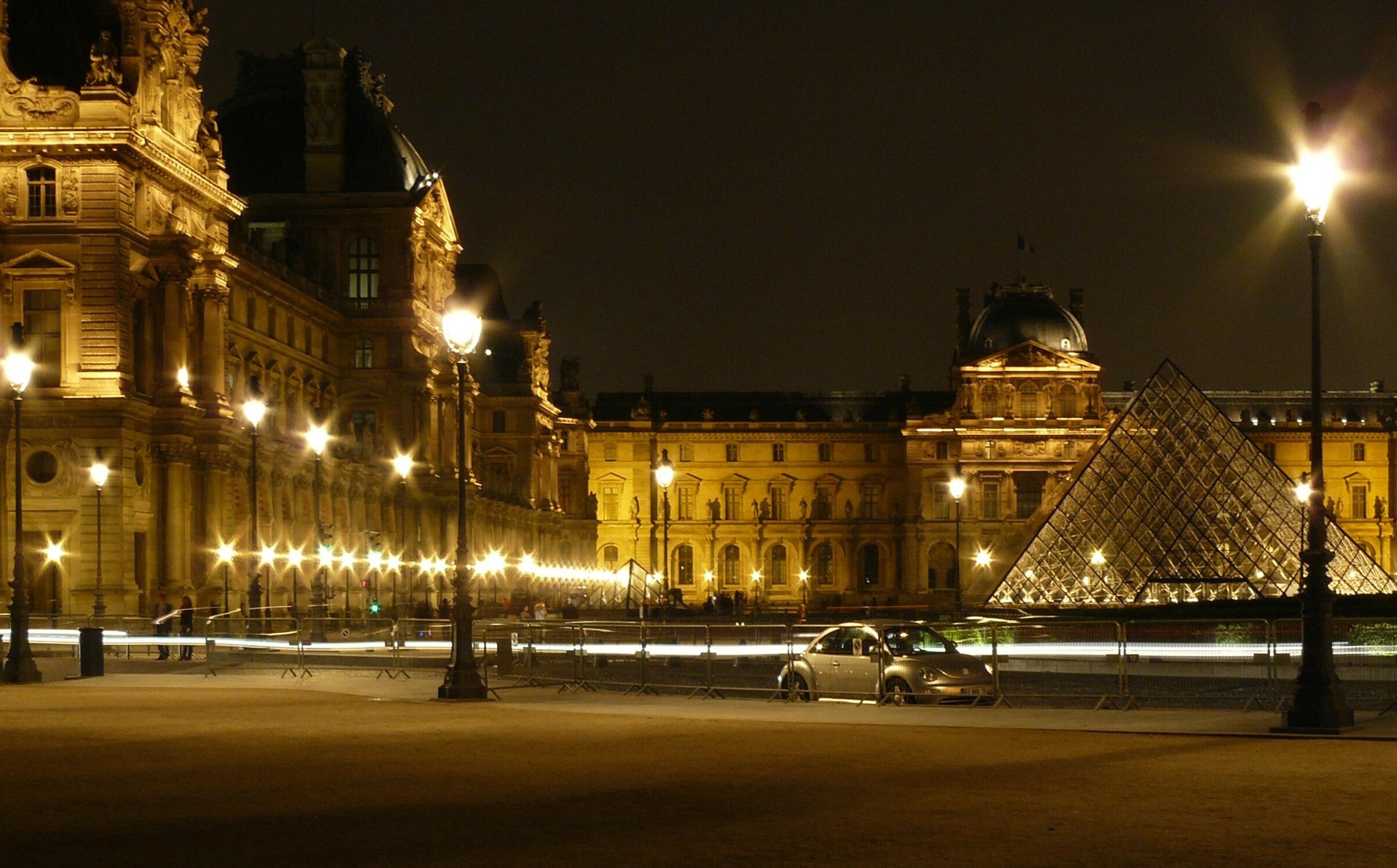
If you love history, and you love art, then you’ll want to visit the Louvre.
That said, if you want to make the most of your time you will need a strategy.
Yes! Strategy! Mainly because visiting the Louvre and attempting to see all the paintings would be like trying to read every book in a library; it can be done, but you’ll likely need far more time than you have.
The museum is so large that it’s worth doing your research beforehand to see which pieces interest you, which you would like to see up close and have a good look at, versus the ones you’re happy to experience ‘on the fly’ as you walk through the halls on your way to other pieces, or not see certain works at all!

It can be tough if you’re not familiar with the history of the pieces or if you’re unsure of what you want to see. The best advice I can give you is to research your favourite works of art and see if they’re even at the Louvre. Don’t assume they will be! A good deal of the pieces Aunt River wanted to see were in various museums scattered across Europe; one was even in New York! When you know if your favourite piece is there, search to see if there are others like it, perhaps of a similar topic or by the same artist or from the same time period. Personally, I wanted to see the Mona Lisa, and St. John the Baptist, both by Leonardo DaVinci, as well as the Code of Hammurabi, a pillar of law from roughly the 1700 BCE. Don’t forget that the Louvre doesn’t just hold paintings, there is a whole hall of magnificent statues to be viewed as well.
Choose your favourites, and be sure to see the ones you’ll regret missing first. Be aware that if you, too, want to see the Mona Lisa, there might be a bit of a crowd. She’s got a hall basically to herself, she’s that popular. You should also be aware that there are many halls and sub sections of the Louvre. It can be quite a walk. I had to go to what felt like the ends of the entire museum just to see Rembrandt’s Bathsheba, so don’t be running around in high heels or flip flops. Throw on some sneakers to make good time and keep your feet happy.
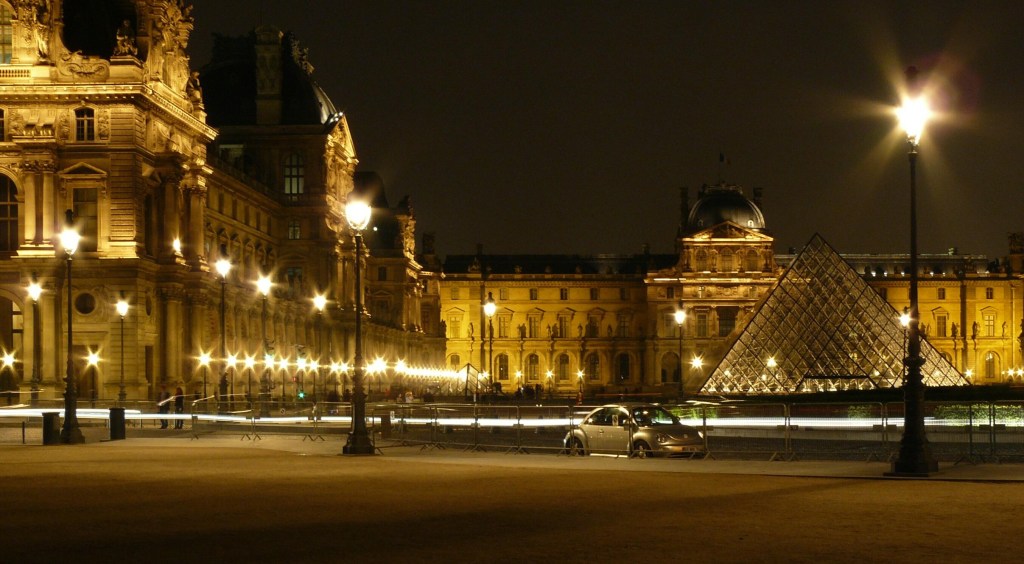
The second greatest piece of advice I can give you is to use the secret entrance.
Tourists will flock to the glass pyramid, the traditional entrance to the Louvre. If you want to see it, go there after it’s closed. Your entrance is in the underground mall beneath the Louvre itself. If you’re taking the Metro get off at the Palais-Royal – Musée du Louvre station. Rather than go directly above ground, keep following the shops. They’ll be high end, expensive looking ones. The entrance will be to your right, and it will be well indicated. There will be a security staff member there, and it looks like it could possibly be a staff entrance, but I assure you it’s not. While everyone else is upstairs boiling in the sun waiting to get in, you’ll have your ticket and be speeding off to see the Winged Victory of Samothrace in no time.
The online tickets are €17 rather than €15 when you buy them at the museum, but there can be limited quantities. Having come all that way as a Canadian an extra two euro is worth being assured entrance. Due to the Covid Pandemic any guest over the age of 12 will also be asked for a ‘health pass’, or vaccine passport. You can get an audio guide at a desk near the washrooms should you wish, or bring along an artistic friend. My forte is in the classics, so Aunt River filled me in when it came to the Dutch masters. On that note, try to go to the washroom just before you go into the museum, while you’re still under the glass pyramid. The washrooms in the museum are, I found, few and far between.
Remember while you’re there to be respectful of these works of art and, while you admire them, of other patrons. Wear a mask, wash your hands, and be safe gentle reader.
Schloss Nymphenburg: Gardens

Much like Versailles, Nymphenburg was a palace with extensive grounds. As I have stated, the original building was a hunting lodge, so while other palaces might have manicured lawns, gardens, and orchards, Nymphenburg has remained more forested.
The park itself is still stocked with small deer and birds, much as it would have been in the eras when Germanic royalty used it in their leisure time, though the animals are doubtlessly much safer when visitors arrive to the palace now than they used to be back then. As always, these photos were taken by the lovely Forest!
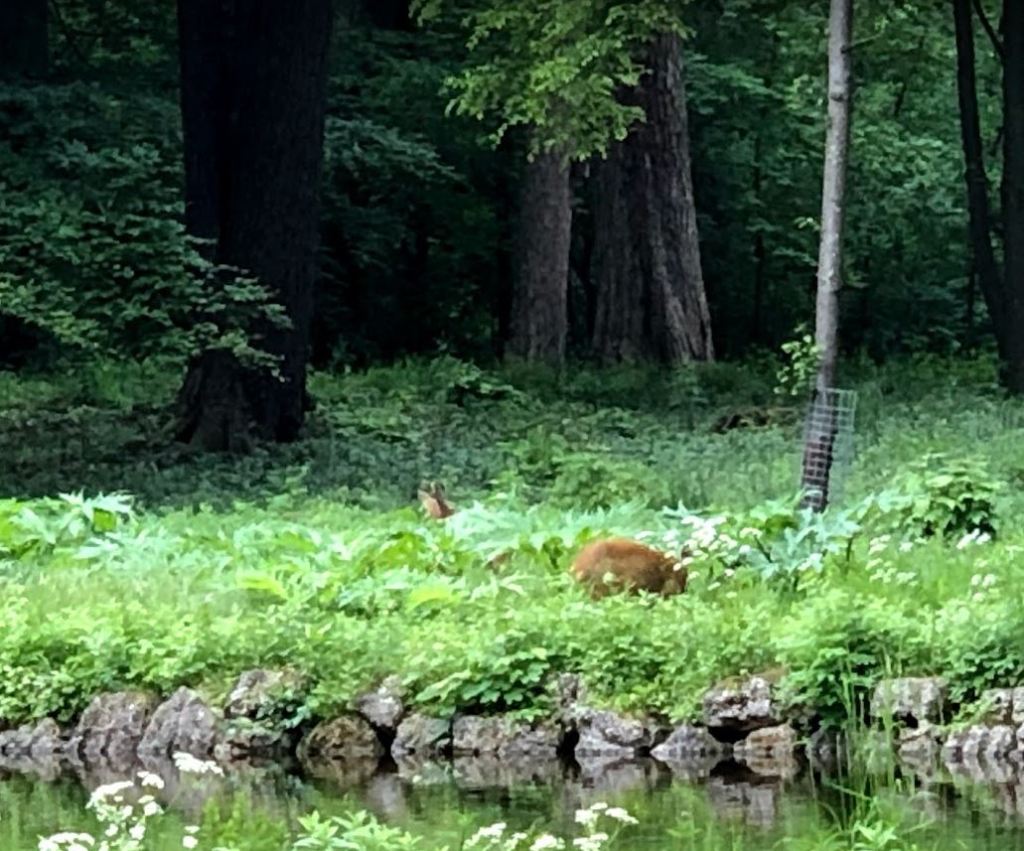
If you’re quiet, and look around carefully, you might spot one of these creatures skittering through the underbrush. More likely though, you’ll see the swans which are pervasive in the lakes, ponds, fountains, and canal which make up the waterworks of Nymphenburg. You can approach and pretend to feed the swans all you like, but you’ll also see geese, and as a Canadian I encourage you to leave those ill-tempered dinosaur descendants alone, especially if there are goslings nearby. When Forest and I visited Nymphenburg, one naïve, presumably non-Canadian young man learned this lesson the hard way after trying to pet some of the babies. Mama was very angry.
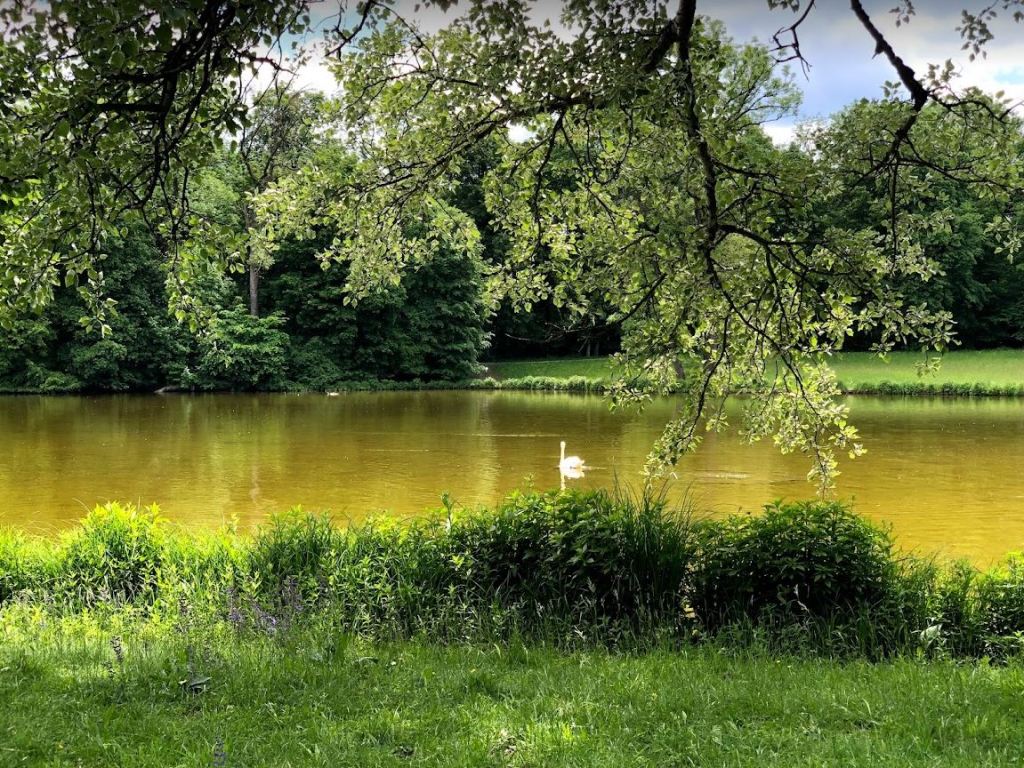
The waterworks themselves have an interesting history, one which you can learn more about I believe by visiting the pump house, though Forest and I did not visit. For Forest and I it was enough to take in the sight of the water, cross the charming bridges which crossed the canals, and admire the waterfalls at the end of the estate. Unlike Versailles there are really no massive fountains, instead Nymphenburg is a place where tranquil and calm waters are pervasive. Nymphenburg is a place which reminds one that it is not the destination but the journey and the friends you share the road with which are important.
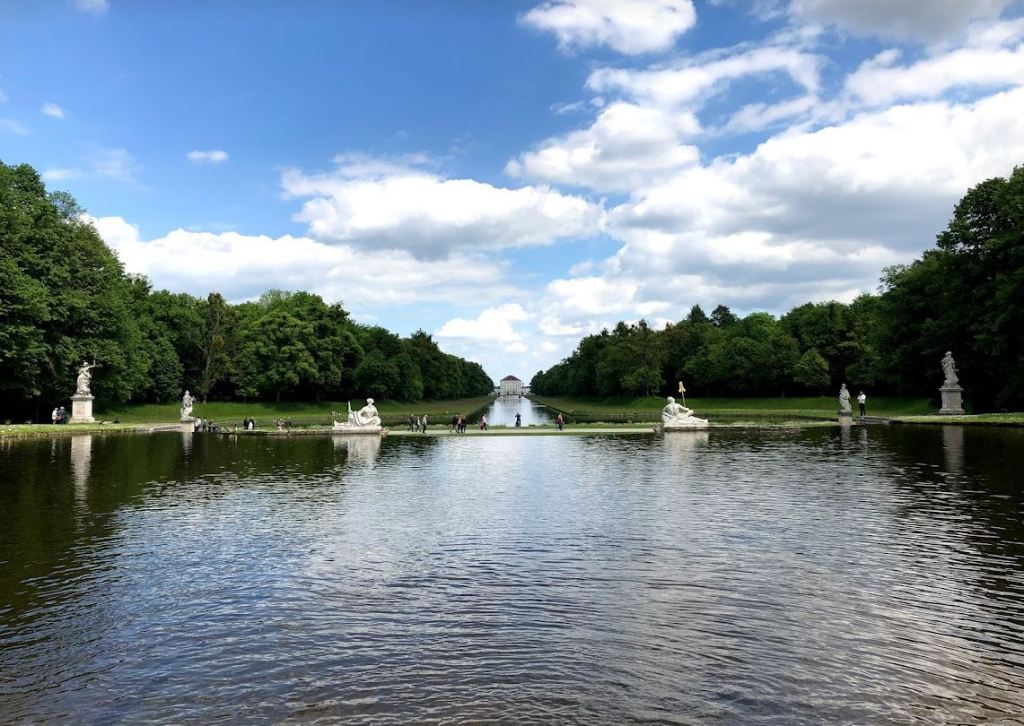
Thank you very much for joining me in November in Nymphenburg!
I’ll resume my regular schedule of posts on Friday.
Wash your hands, wear a mask, and stay safe gentle reader.
Schloss Nymphenburg: Badenburg

The last building to visit in Nymphenburg, other than the fountains and follies of course, lays quite a ways away from the other buildings. I would encourage you to continue your way around the canal, take in the Great Cascade as you go along, as well as the Apollo-Tempel or Temple of Apollo folly. It’s a cute little place to sit, relax, take in the view of the lake and the Badenburg, and rest your feet. You’ve likely been on your feet for most of the day by this point, unless you ran through Nymphenburg or made your way to this part of it first. In any case, it’s still a cute little spot to take pictures of the parklands. Credit where credit is due, both of these photos were taken by Forest!

The Badenburg itself is located across the pond if you’re coming from the direction of the Great Cascade. The outer architecture is reminiscent of the rest of Nymphenburg, and the inner decorations are in the same Rococo style as the rest of the palace buildings, the Magdalenenklause not included, naturally. The nature of the building is rather different than the rest of Nymphenburg. Although all of the buildings arguably have a purpose, the Badenburg’s purpose is much more practical. It’s a bathhouse!
The inspiration for the Badenburg comes from the ancient traditions found in Rome, Greece, and Islamic countries, in which bathhouses were used for ritual as well as physical cleanliness, and were also used as a meeting place for men and women, though not at the same time. In the times of the Roman Republic and Empire men and women were given different times as well as different days which the baths were open to either gender. These Thermae, Balneae, and Hammam respectively were very important and all had one thing in common; for the most part they were public, but the rich could afford private baths.
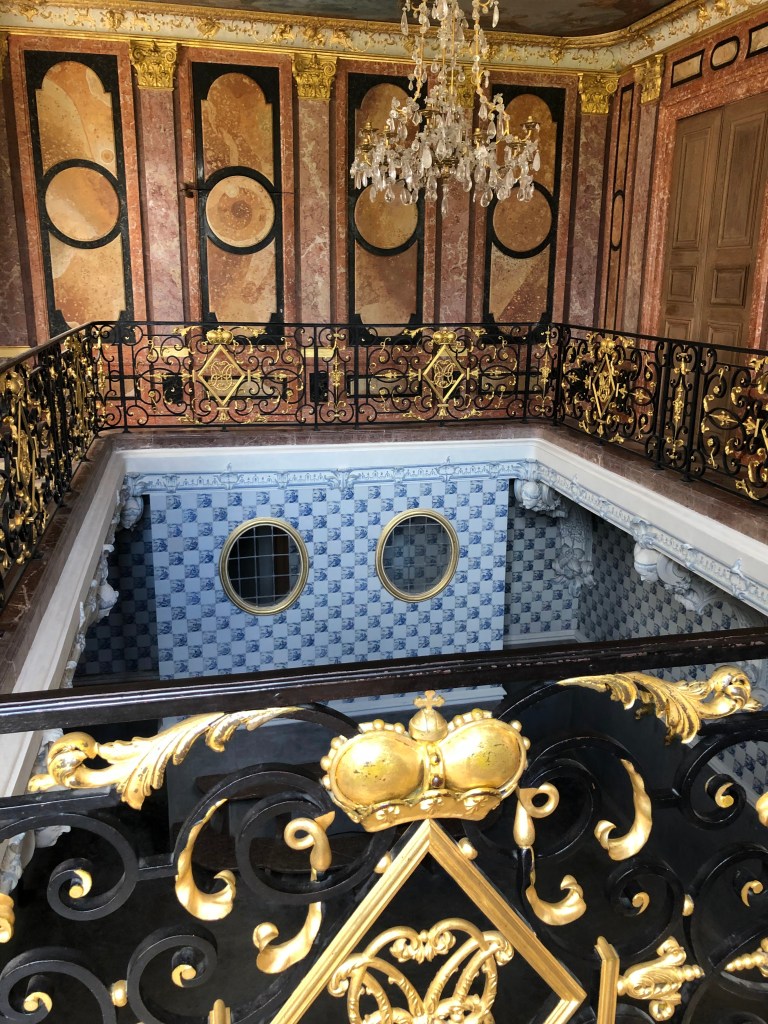
Badenburg is no exception. It was built so that one could have a bath in comfort, and like many of the ancient days it has a reception or banquet hall (many of the ancient baths also had food available), a changing room, and a progression from cold to hot rooms until finally one finds oneself in the bath itself. In Badenburg it is surrounded by a viewing platform where modern guests can look down onto the place where the hot pool used to be. I can imagine a few fool hearty souls would have jumped over the edge, though I doubted it would have ended comfortably for them in the shallow water. Visitors are not allowed into the other rooms, and so the classically inspired banquet hall and pool hall along with a brief glimpse of the Chinoiserie decorated changing room entrances are all that you will be able to see.
When you leave the Badenburg there is still a lot of Nymphenburg to see, including the grounds, the pump house, and the greenhouse, but this is the end of the buildings which Forest and I saw. Next up we’ll take an in depth look at the follies, fountains, and other garden features around the palace!
Schloss Nymphenburg: Pagodenburg
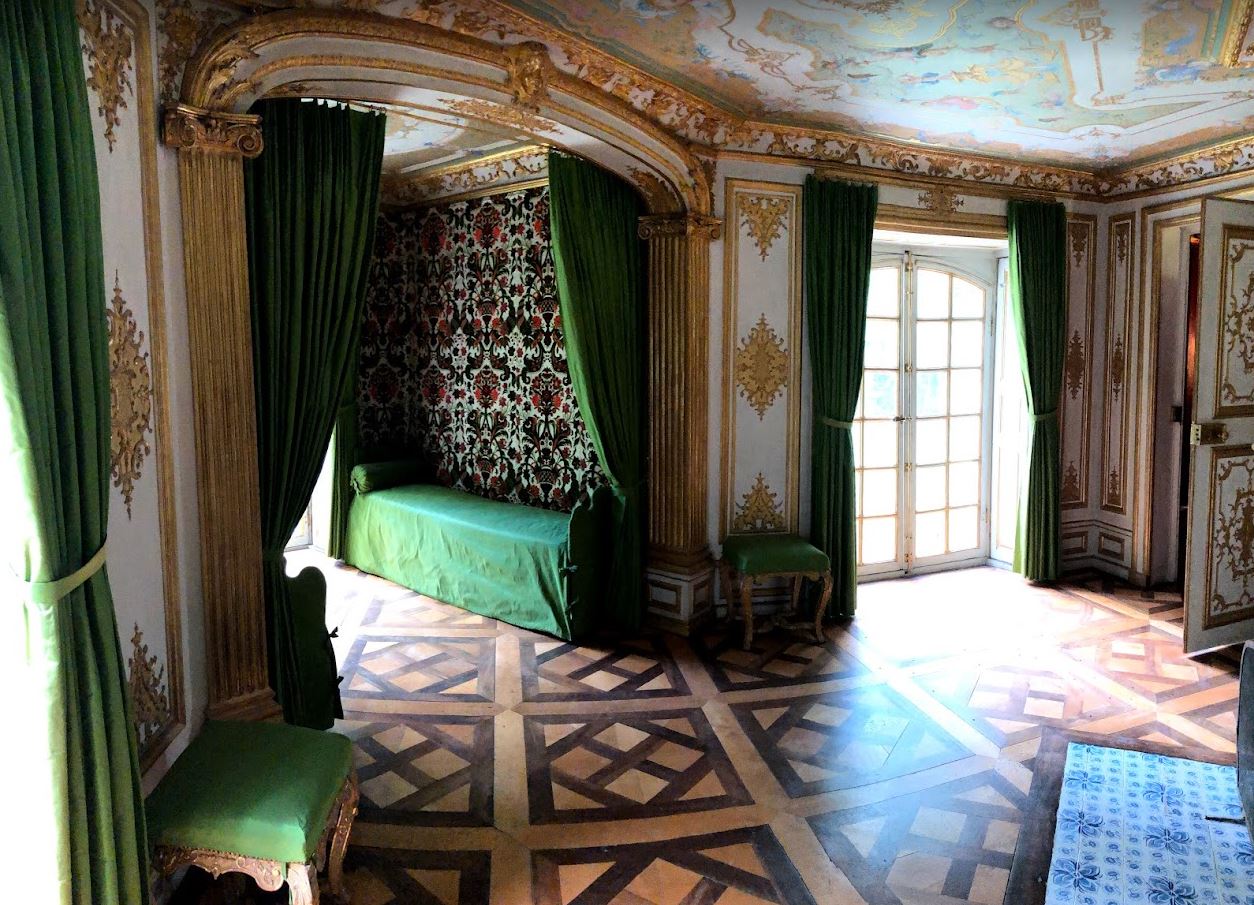
Remember how Amalienburg had a kitchen with Chinoiserie in it? The Pagodenburg is nearly a whole building of it. Obviously, unlike it’s name suggests, the Pagodenburg is not an actual pagoda. I know. I was disappointed, too. Pardon the lighting in these photos, Forest tried her best, but it was altogether too low in some areas and too bright in others.

That said it does have the strongest nods to Asia in all of Nymphenburg. The ground floor consists of the same white and blue style and Delft tiles that Amalienburg has, and is furnished with a round table and several couches. One of the four ‘wings’ consists of a staircase which leads to a boudoir in full orange and black Chinoiserie as well as a green room in the French regency style.
Inside the upper wings there are nooks for various uses. In the boudoir there is a games table, while in the green room there are small, one person couches which may have been used more as beds.
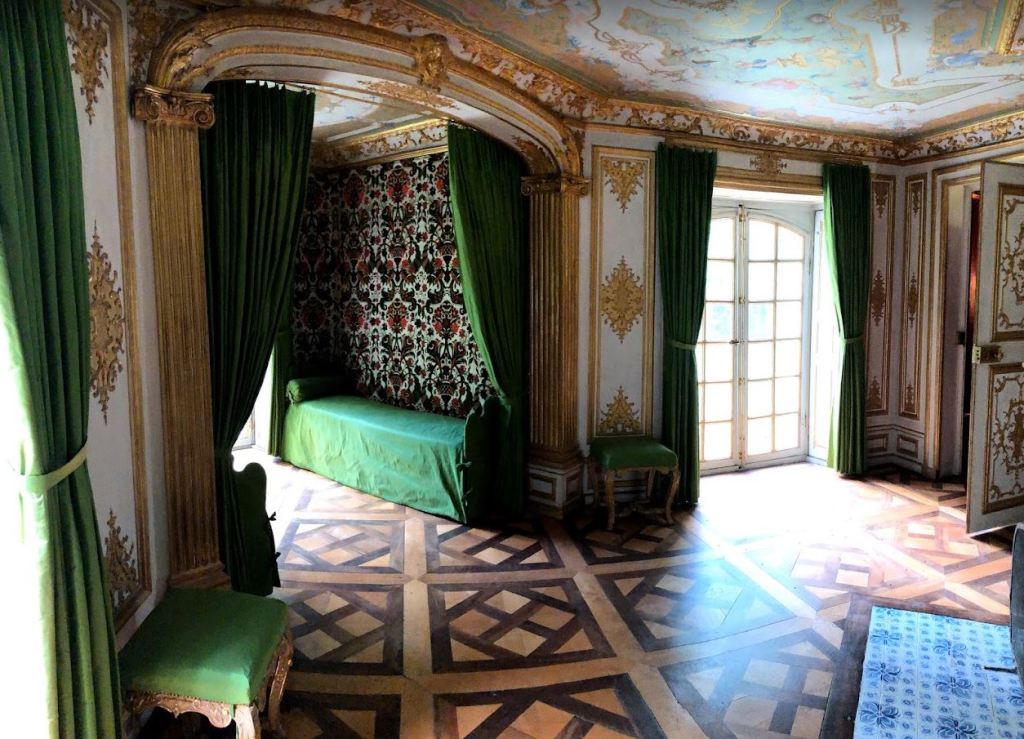
The purpose of this especially tiny palace was to give the royals and their guests a place to rest after games of Mailspiel. This, though it is described on the Nymphenburg website as being like Golf, is actually a lawn game more similar to croquet.
It’s such a small portion of the palace, but I get the feeling that a lot happened here. There isn’t much more lawn around the Pagodaburg than any other building on palace grounds, and it’s very far away from the main palace. It’s almost at the other end of the grounds, in a very private setting. There’s also a fireplace and a privacy curtain in the rooms with the beds. Mailspiel seems to me rather more of a summer, daytime occupation. Perhaps it was used as a resting place for other activities too, such as hunting on the grounds, or if one took a long walk on a cool autumn evening and happened to be caught in the rain.
Schloss Nymphenburg: Magdalenenklause

If you’re looking for something totally different, Magdalenenklause is it.
Most of Nymphenburg’s aesthetic is very much centered around courtly life, folklore, and fairy tales. It’s very much in keeping with the popular Rococo style and is built, as any palace ought be, to express power and wealth when foreign powers and wealth deign to make a visit.
Magdalenenklause seems to me an odd interpretation on that whole principal. Religion is also a very easy way to promote and hold power, and most European royal families were religions if not outright all Christians. Divine right to rule, and whatnot. Naturally, this means religion plays an important part of their daily life. Queue the Magdalenenklause.

This building was designed to look like a ruin, though apparently this only applies to the outside. The cracks in the plaster and brick are intentional, and as soon as you enter the building it is very evident that a ruin it is not. The entire chapel is covered nearly floor to ceiling with shells, corals, and stones in mimicry of an Italian hermitage. Think The Shell Grotto in Margate but warmer tones and of less mysterious origins.
The point of the Magdalenenklause is supposed to be one of contemplation, presumably, as is the usual in such spaces, towards abandoning one’s earthly pleasures in pursuit of a more divine goal; the passage into heaven.
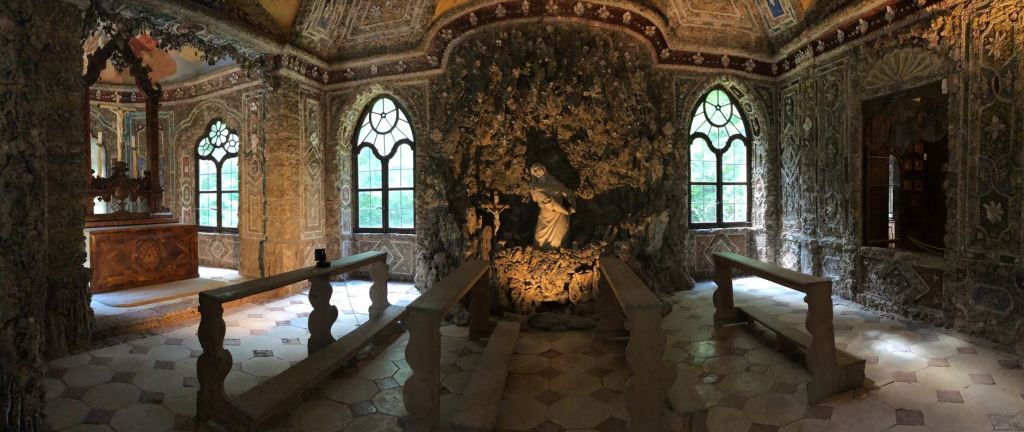
If one had grown up being brought to the Magdalenenklause perhaps that might be possible, but as a visitor, the stunning display of Mary Magdalene within the grotto detracts from contemplation. To say that it’s a beautiful piece of artwork is to detract from it, somehow. It’s not supposed to be beautiful in the style that Nymphenburg is. This grotto is a darker, rougher, more visceral beauty, and she stands out all the more for being within Nymphenburg.
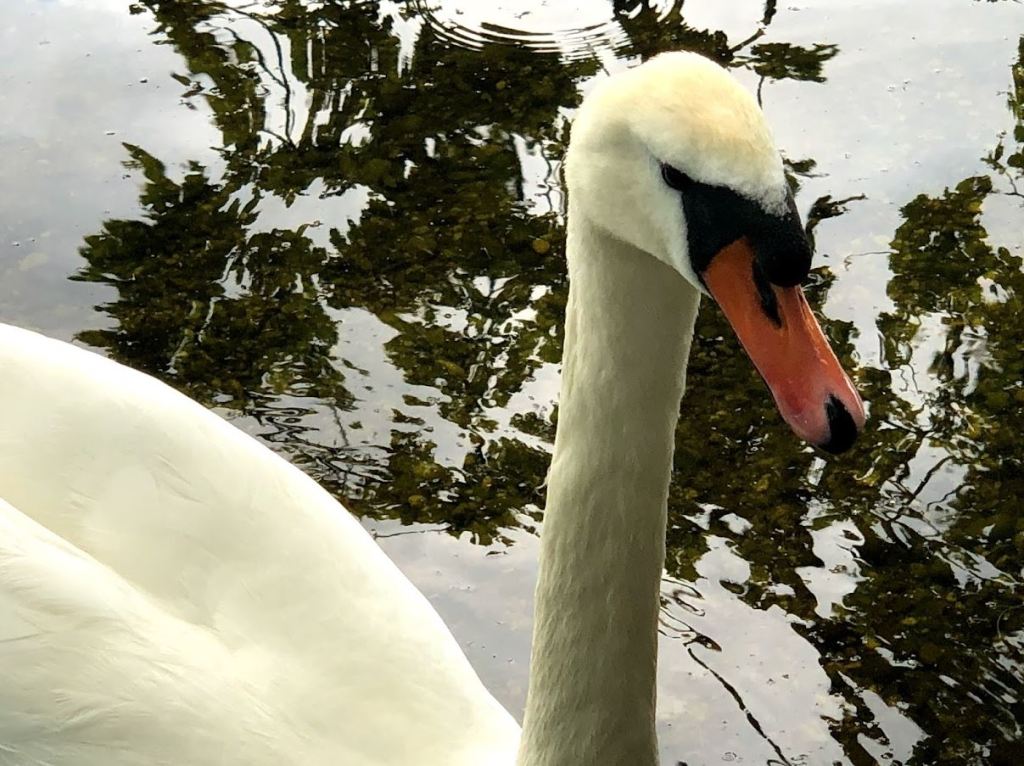
When we left Forest and I followed the path from the Magdalenenklause and, if memory serves me, we spent a bit of time wandering the outer ‘fields’ of Nymphenburg. In our travels we found a pond with some ducks and swans, and some park benches for visitors to sit and enjoy the tranquility. Ever the photographer, and lover of all things fairy tale, especially swans, Forest stopped to snap at the edge for some pictures. She remarked that she wished the swans were closer for a better shot, so I knelt and held out my hand to them as though I was offering a treat.
Forest didn’t appreciate my methods, and if this photo is anything to go by, neither did the swan.
Schloss Nymphenburg: Amalienburg
“You know what this hunting lodge needs,” said Karl, presumably, one day while looking out at the palace grounds, “a hunting lodge.”
And thusly, Amalienburg was made.
Karl had Amalienburg built and named after his wife, Maria Amalia. The Empress enjoyed hunting immensely, and the grounds of Nymphenburg were kept well stocked with pheasants and deer for the royal family to hunt. The dome is surrounded by a gated walk, and there are hunting bluffs upon the roof of the Amalianburg as well designed for shooting pheasants.
I must give credit here to Forest for having taken these pictures for me, she is by far the better photographer.

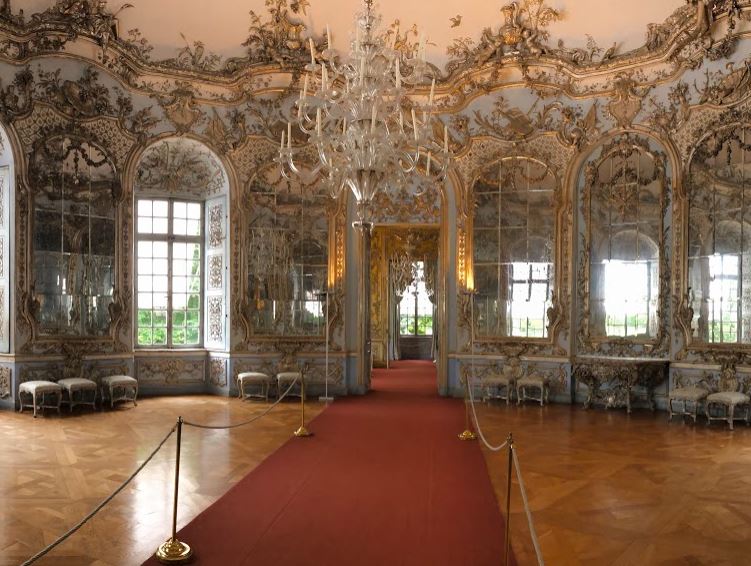
The interior was decorated in a style reminiscent to the Hall of Mirrors in Versailles, though with less nods to Apollo the Greek sun god, and more homage paid to Diana, the Roman goddess of the moon and hunt. The building has many small anterooms, including one with built in beds for hunting dogs and another with a day bed nestled within the walls of the room, the bulk of the palace is taken up with two rooms.
The first is a blue, circular, imitation Hall of Mirrors, which was likely used for entertaining on a smaller scale than the Great Hall of Nymphenburg Palace proper. This hall, and the smaller yellow anteroom which follow it, are to my mind the inspiration for Linderhof Palace’s bedroom. Having seen Linderhof first, it was easy to pick out those details of Amalienburg which Ludwig II loved about it and decided to bring to his own personal hunting retreat. It was very interesting to be able to see where Ludwig II’s inspiration had come from, and to imagine him combining all of his favourite parts of Amalienburg into one room.

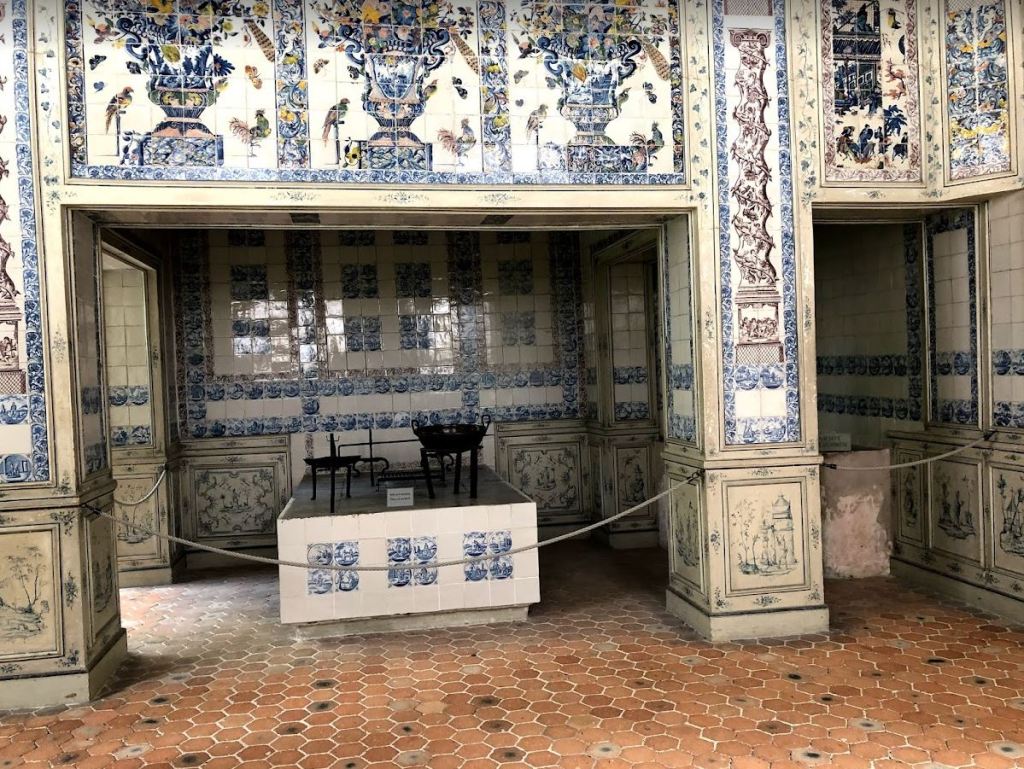
The second largest room is the kitchen, decorated in Dutch tiles of Delft blue and touches of a style called Chinoiserie which had become popular in Europe. It’s important to note that this Chinoiserie was not, as one might think, true representations of any Asian country. The style was merely a western interpretation of what they thought Asia ought be. Those ideas could have come from books about the Asian continent, or from stories of those who had actually made the trips to those countries which weren’t altogether closed to foreigners, foreigners who likely didn’t have a full grasp on the significance of the styles they were seeing. Japan as well as China had, at times, very strict isolationist policies, so it’s not shocking that these interpretations are vastly inaccurate, beautiful though they may be.
When Forest and I finished at Amalienburg we made our leisurely way through the palace parkland, skipped across the canals, and had lunch at the café which is next to the greenhouses. The food was delicious, and if you have the money I definitely recommend trying it! Afterwards we headed off to the ‘Grotto’, or the Magdalenenklause. Coming next week!
 Lostman's Star