Lostman's Star
Not all those who wander are lost, but I certainly am!
Clava Cairns
Way up in the highlands of Scotland, I was inspired to visit these monuments by my mother’s love of the book Outlander by Diana Gabaldon. In the first book, the protagonist, Claire, visits a place near the Battlefield of Culloden called Craigh na Dun. The inspiration for this stone circle was the Clava Cairns.
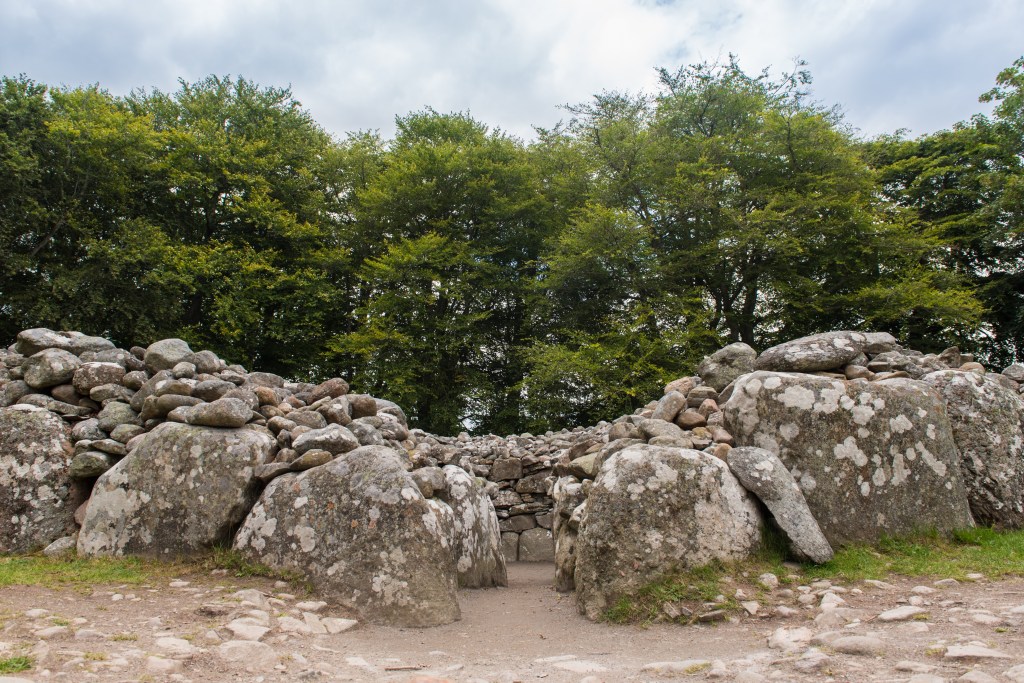
If you’ve ever played Skyrim, you’ll have some idea of what the word cairn entails. It means a burial place, which is exactly what the Clava Cairns are. Several of the four cairns had remains in them when archaeologists began studying them in earnest. These bones have been removed of course, and the area surrounding them has been walled off with a small stone fence. You can still go in of course and explore both the exterior and interior of these low walled cairns.
Of course, we have no idea if burial was the original intention of these stone circles, or if the bones were added long after their original purpose was forgotten. I’m no expert, but to me it seems like they were at the very least ceremonial in purpose, as they are quite similar to other passage tombs I’ve had the privilege of visiting. Deliberate notches in the stone are reminiscent of ancient constellations, and although Gabaldon didn’t know this when she wrote Outlander, there is a cleft stone in the middle of the park!
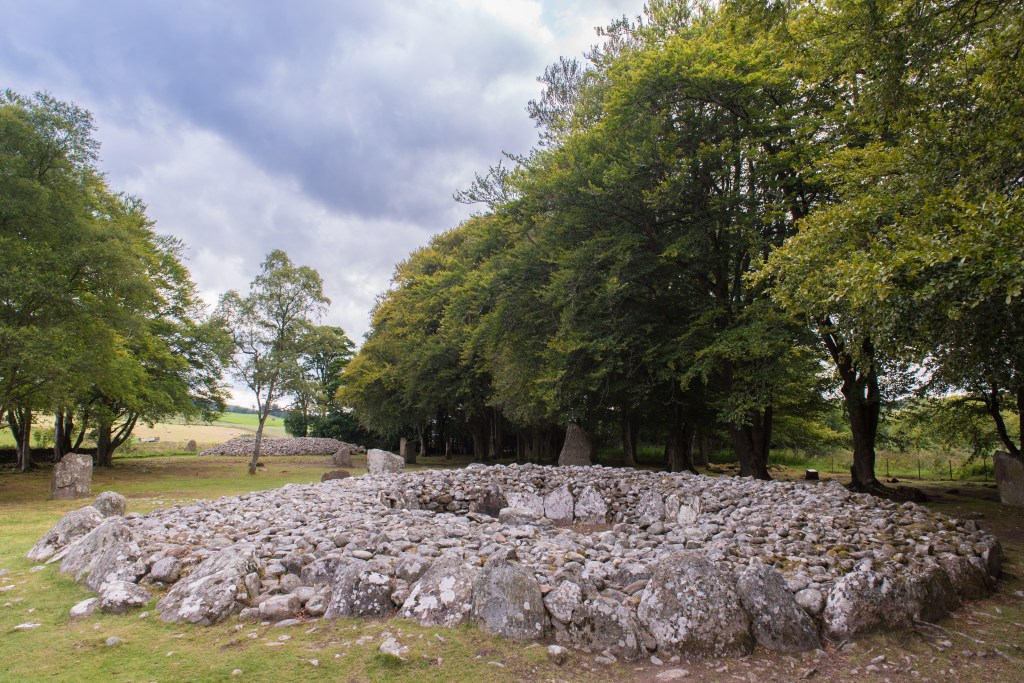
If you have a car you can drive right up to the park where they stand and see them for yourself. If not, tours of the Clava Cairns, Culloden, and the rest of the highlands leave from Inverness. It’s a public park, meaning there’s no entrance fee, and any time of day is a good time to visit, but I happen to visit just as the sun was setting, when the shadows were playing among the leaves of the trees. They’re great, massive things growing between the cairns, and the fading light certainly adds mystique to the area; not that it lacks any.
Are there any old, prehistoric dwellings that you know of? Let me know in the comments!
 Lostman's Star