Lostman's Star
Not all those who wander are lost, but I certainly am!
Le Hameau de La Reine
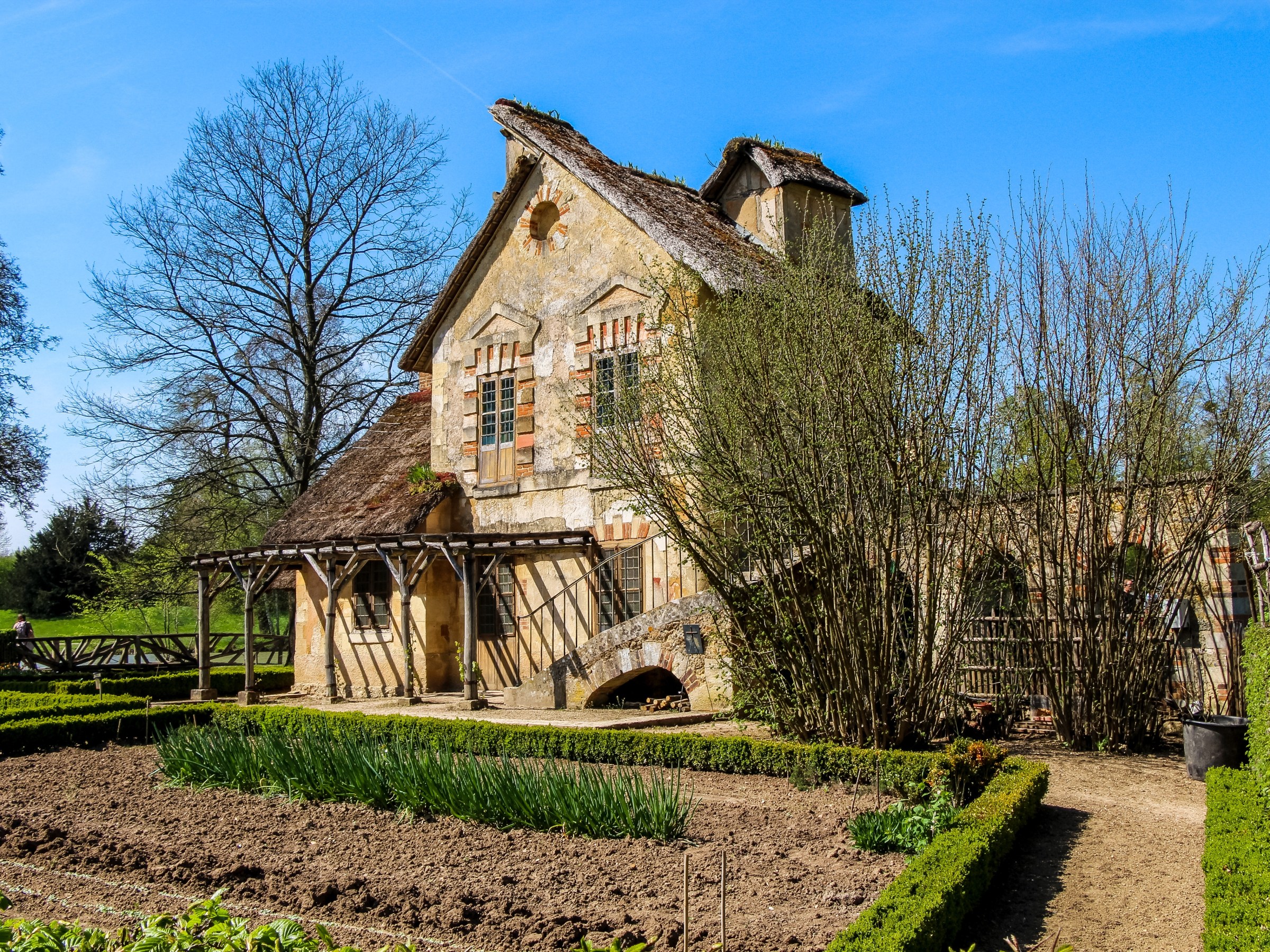
The English name for this space is the Queen’s Hamlet, and it’s situated just behind the Petit Trianon. It was built specifically for Maria Antonia and was as much a part of her retreat from court life as the Petit Trianon.
If you have come from the direction of the Pavillon Francais, then you will find the paths to the hamlet just behind the Petit Trianon. You might pass a folly called the Temple D’Amour, and ultimately any path you take, as long as you are stay vaguely to the right, will bring you to the Hameau eventually. The paths all intertwine. On your way you’ll find many beautiful plants and magnificent trees which were brought as seedlings from foreign lands. Some were planted around the time of Louis the 14th, so it’s safe to say they’ve been there a while!
Be sure to watch your step when you come to the lake, and your phone. You will likely not get it back if you drop it. Not because the lake is deep, I wouldn’t know, I just know that the fish in said lake are big enough to eat your phone without issue. You can either go around the lake or cross the bridge to get to the little village that Maria frequently escaped to.
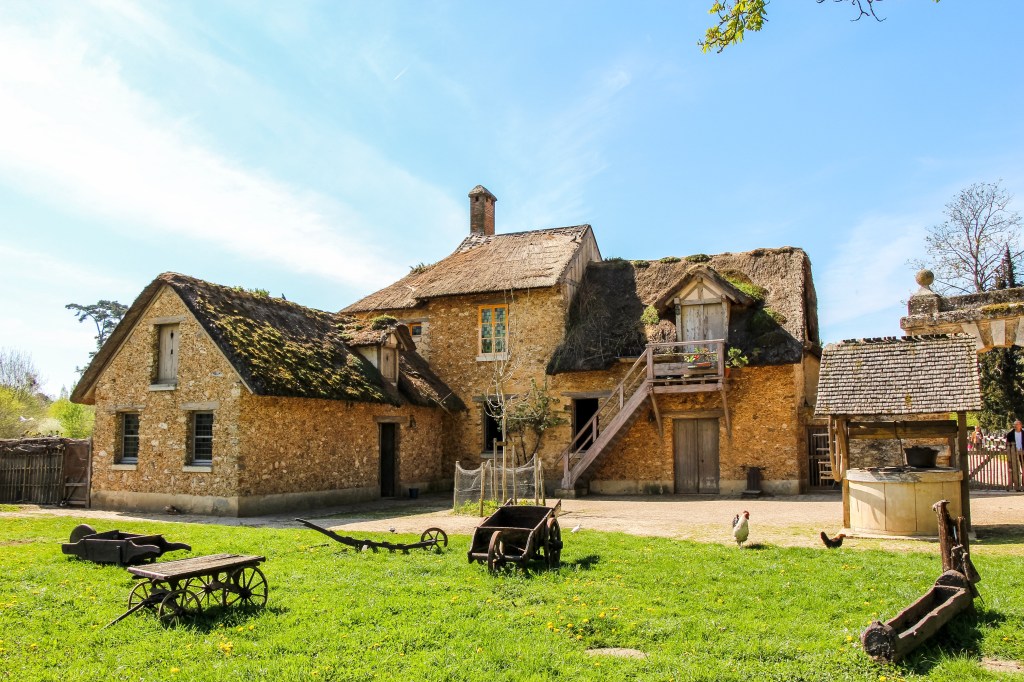
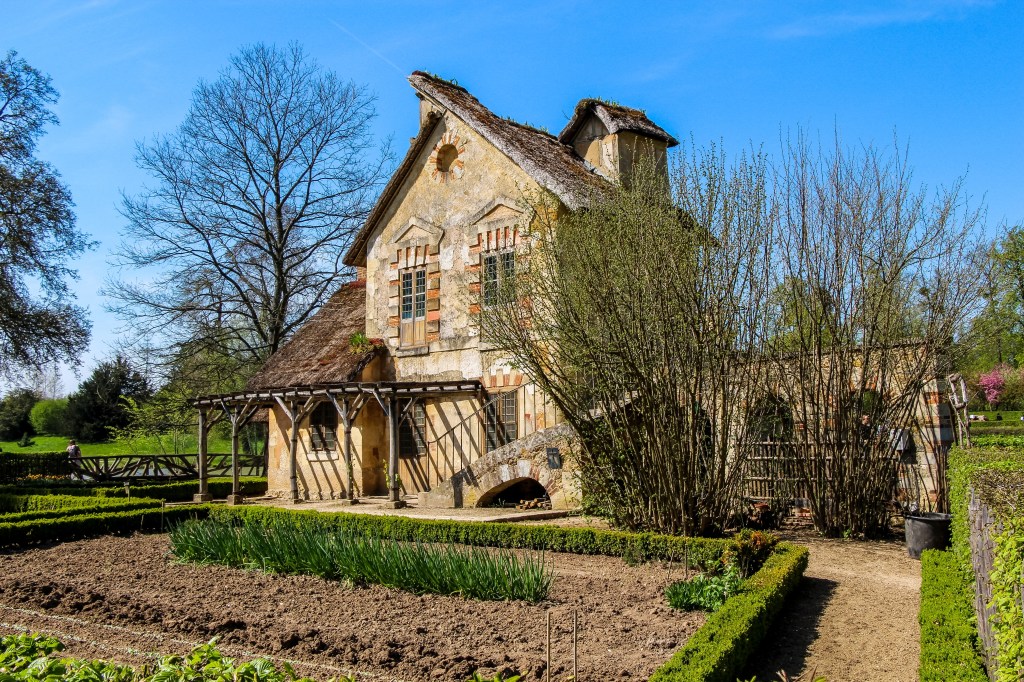
As I stated in the previous article about the Petit Trianon, Maria was a bit naive about what peasant life was. If you are on a tour you might not be able to go inside the buildings, but you can certainly have a peek in through the windows. It may look like a village, but it’s like none you’ll have ever seen before. The long, grand building is yet another house for the queen, the one next to, which on it’s own is a full sized house, is occupied by her living room and wardrobe. There is only one regular sized home in which her captain of the guard lived on the other side of the lake from the rest of the estate.
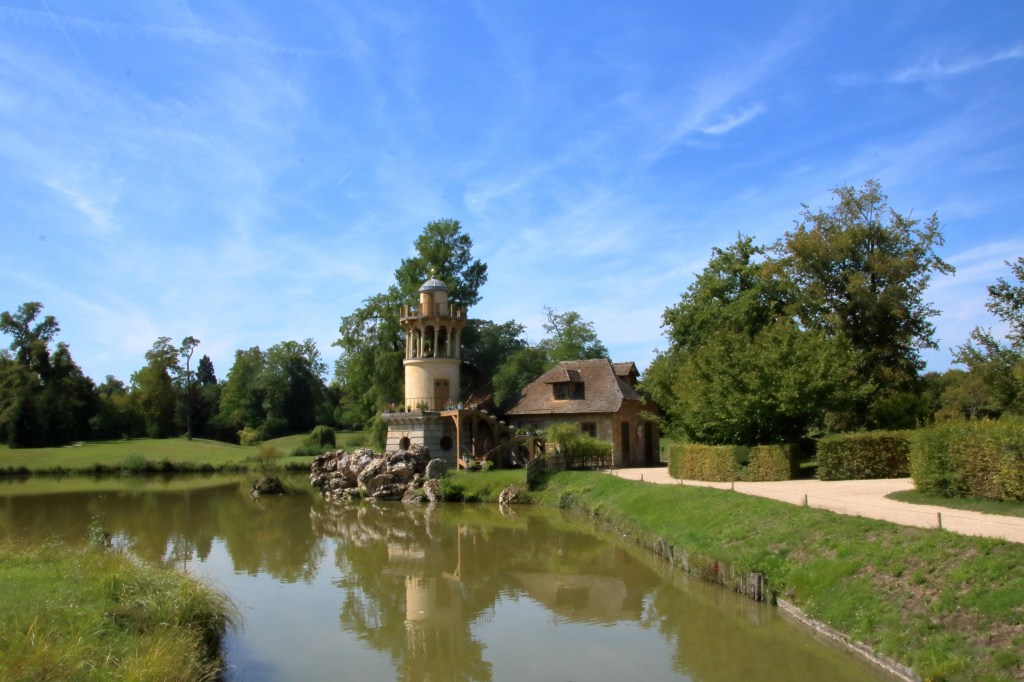
What looks to be a lighthouse is actually a fishing tower, the top of which could be used to communicate with the main palace of Versailles via signals, and the docks surrounding it were used to house boats which would take the queen on rides.
No one who knew what it was like to live as a farmer would ever have designed this village in such a manner, though there is one major point I have to give to Maria: the Hameau was a functioning farm which supplied food for Versailles. These particular lawns of Versailles were not totally useless, as the general French population might have believed.
Next week we’ll back track up to the main palace of Versailles, to the magnificent fountains that adorn its parks. Today Versailles makes a musical show of the fountains which can be viewed on certain days and evenings, but rumour has it that back when they were first built they would only be turned on when the king passed because they used so much water!
 Lostman's Star