Lostman's Star
Not all those who wander are lost, but I certainly am!
Reculver Towers and Roman Fort

If you happen to be travelling through Kent, the Reculver Towers and Roman Fort is a perfect place to stop. You’ll find them situated between Margate and Whitstable, a little ways off the A299. If you’re coming from Margate turn left on Heart in Hand road, and turn right at the T intersection. Keep following that road, it will change names to Sweechbridge Road to Reculver Lane. If you’re coming from Whistable turn left off the A299 directly onto Sweechbridge Road.
Keep following Reculver Lane and you’ll eventually come to a car park directly across from a pub called the King Ethelbert Inn,. If you don’t want to go to the pub there are public washrooms available in a building next to the car park, though you will have to pay for them. If memory serves me there is a designated area where children can play with some equipment, though if I’m wrong I do know that there’s still plenty of open area for children to run around.
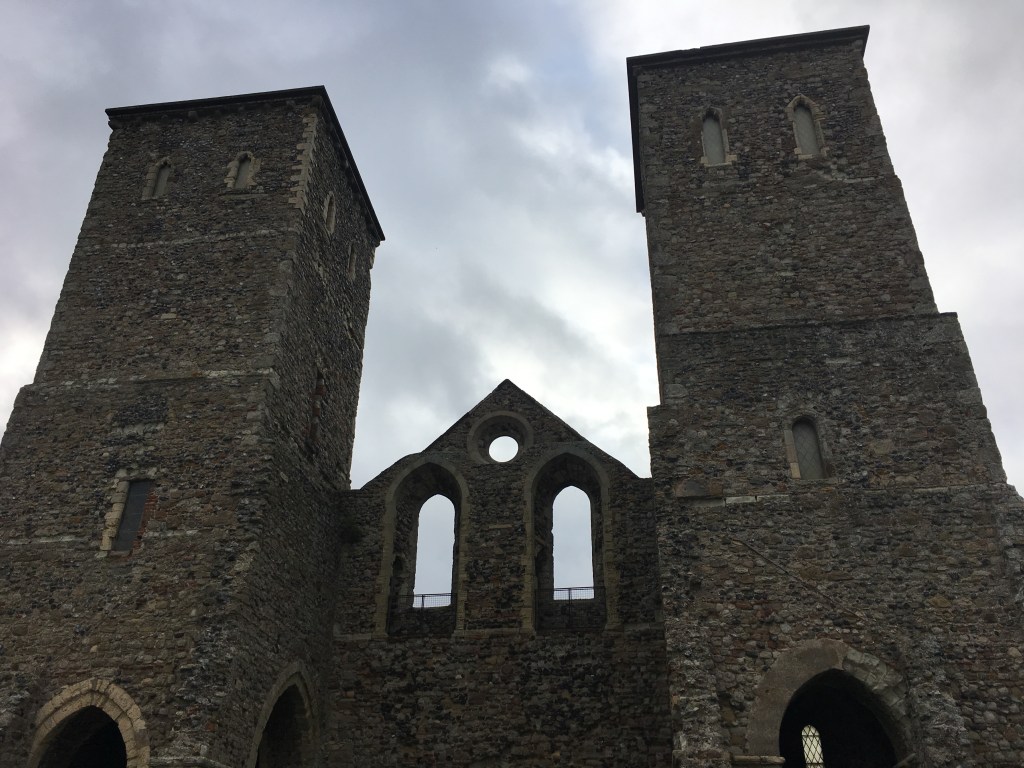
To the right of the car park you’ll find what you’re really here for, the Reculver Towers and Roman Fort. The towers are the remains of a medieval church for the Reculver area, though are themselves a remodeling of an older monastery. They’re less towers and more facade in my opinion, as it and the foundational stones are the only ruins to be seen.
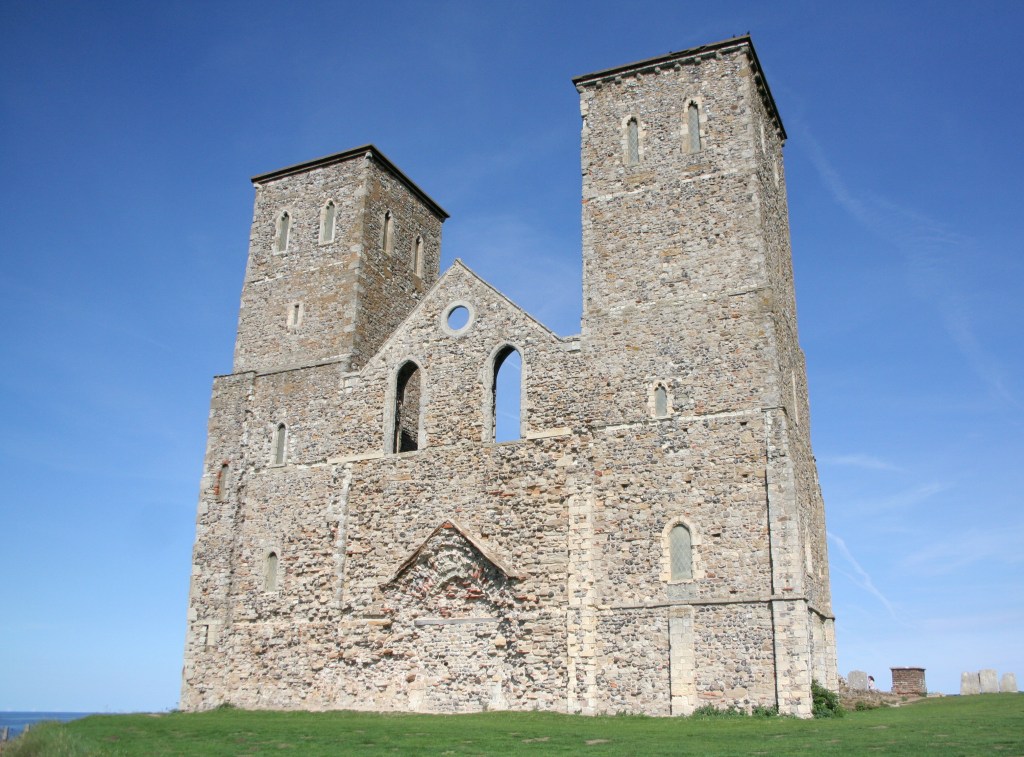
As one google review states ‘there isn’t actually a Roman fort” there, which is more or less true, but you will find plaques all around the area explaining the history of the area. The fort was first built by the Romans to guard against Saxon invasion. In today’s terms, it would be like if the United States built a fort on Canadian soil to stop the Canadians from invading; something they’ve actually done, though with dubious effectiveness. Through erosion and the cannibalisation of stones for other projects like the Reculver Towers the original form of the buildings are lost; but in a way the fort is still present through those re-used stones!
Apart from the history and the ruins the area is an ideal place for a rest stop. I spent most of my time there reading the plaques, wondering whether or not I’d be able to climb the towers Assassin’s Creed style if I tried my best, admiring the sea, and just enjoying the company of a friend. We even spotted a seal!

You need very little to enjoy this lieu, just a bit of money if you want to use the bathroom or have a pint, and perhaps a sweater as the wind off the sea can get chilly. They aren’t necessary but if you want to bring a set of binoculars you can take a better look at any seals who decide to visit, and the the WW2 defense towers and windmills which you can see from the shore.
Wear a mask, wash your hands, and stay safe gentle reader.
10 Tips for Flying with Children (5 for parents, 5 for non-parents)
I think I’ve been on perhaps one, maybe two flights where there weren’t any children on-board. You are bound to encounter tiny humans as a wanderer-of-the-world, and as parents, you’re probably going to want to travel with your children. It’s good for them! They should absolutely be exposed to cultures and spaces which are different from their own.
Keep in mind that all of the tips for are conditional upon you and your family’s needs. Don’t give your kids an iPad loaded with seizure inducing games if they have epilepsy, and don’t give them strawberries if they’re allergic to them. If you’re the childless traveler, these tips are just ways to be considerate. Sometimes you will not be able to choose the considerate option, and that’s okay. Take what resonates, and here we go!
As the Childless Party:
- Be prepared. Noise cancelling headphones may or may not totally drown out a screaming baby or a fussing child, but they’ll certainly help.
- Don’t go for the mac and cheese in flight meal option. That’s for kids and vegetarians.
- If you happen to be in line for the bathroom in front of a child, let them and their parents go first. Kids have tiny bladders, and if they happen to have an accident your flight will get infinitely worse.
- If there is a child whose misbehaviour is directly affecting you (chair kicking, for example), address the parents in a polite and friendly manner. If the parents refuse to do anything about their child’s behaviour, speak with a flight attendant. It’s not your job to parent other peoples’ children (even if the actual parents refuse to do it), and you will no longer be the sympathetic party if you lose your temper at a child.
- Unless they’re outright abusive, don’t judge the parents for tactics they’re using to keep their children in line. They’re trying to get through this flight as best they can.
As Parents and Guardians
- If you need a leash, use one. I personally hate it when I see people with leashes on children, backpacks variants or no, but it is far better to be safe than sorry, especially in a busy airport.
- You already know this, but bring sani-wipes.
- If your child doesn’t want to sleep, just let them stay up until they fall asleep naturally. This will mean either you or your partner have to stay up to make sure they stay in their seat, or trust that your child is well behaved enough not to wander off. You cannot force your child to sleep, and attempting will make you look at best ridiculous and at worst like a terrible person when you inevitably lose your temper.
- Make sure the snacks on hand for the duration of your trip, airport to airport. Sugar and caffeine free are best; your kids will be restless enough, you don’t need to go around adding stimulants to an already active child. Walking with them up and down the aisles can help to alleviate some of that restlessness for both of you.
- Treat flights as a bit of a fun, educational, bonding day. You want your kids to enjoy travelling, and you want them to learn how to behave in an airport and how to make their way around the world. Have them be part of the process by asking them what time it is, how much time until the plane departs, down which hallway do they think the plane will depart. Play guessing games, like where they think other people are going. Ask them why they think they’re going there. This will keep them entertained, off the iPad for as long as possible, and will develop their critical thinking and investigative skills.
BONUS TIP FOR EVERYONE!
Try to have fun! The airport is a place where everyone is worrying about something, be it themselves, their flight, a business transaction, a family member, or whatever else. Be kind, be patient, and be forgiving.
Wash your hands, wear a mask, and stay safe gentle reader.
Oh Canada
Good morning, gentle readers.
I run a travel blog. I travel because I love it, it’s one of my passions. I want to see as much of the Earth as possible, to witness the wonder of my world.
I travel to learn, and have learned a great many things.
That is the trouble with learning. The more you know, the more you want to know, and some things, once known, are impossible to forget.
If you don’t know about Canada’s history with it’s First Nations, Metis, and Inuit inhabitants, you are about to get your first introduction. It will not be an easy one.
If you’re prepared to learn, or already know; welcome, read on.
You’ll no doubt have heard the news of over one thousand unmarked graves. Some of these graves appear to be those of adults, and in a presentation made by Chief Cadmus Delorme of Cowessess First Nations, there are oral stories which indicate that these adults may have been members of the Catholic Church and were buried in the area near the Marieval Residential School. They are in the minority however; most of the current graves found near residential schools appear to belong to children.
If you do not live in Canada, and even if you do, you might not understand the significance of these graves.
Residential schools were set up by the Canadian government, often alongside Christian religious organizations such as the Roman Catholic, Methodist, Baptist, United, and Presbyterian Church. Some schools eventually came under the administration of the First Nations themselves, though this was rare. The purpose of these schools was to assimilate the local First Nation, Metis, and Inuit population. They were part of an ongoing effort to assimilate and exterminate the indigenous inhabitants of the Americas, an effort which began when Europeans began to colonise the Americas in the 1500s. Here I am excluding the Norse L’Anse Aux Meadows colony of the early 1100s, as I don’t know enough about that particular history to pass on information concerning it.
Some First Nations, Metis, and Inuit parents sent their children to these residential schools willingly, believing they would be receiving an education and a chance to escape the poverty still rampant among their communities today. Some parents hid their children, for fear of what would happen to them. Some families had their children taken by force, something which is still happening to First Nations, Metis, and Inuit parents to this day through forced sterilization and birth alerts. The children in these schools were banned from speaking their native language, instead being forced to speak in English, French, or Latin. Siblings were often separated, either by class or by entire schools, and were often not allowed to see or speak with each other. Many First Nations, Metis, and Inuit people wear their hair long, for a miriad of beliefs to do with identity and spirituality. The Anishinaabe belive that hair should only be cut in times of grief, and that the seperated hair must be disposed of with respect. The first day of school the childrens’ hair was shorn. Throughout their time in these residential schools these children were made to feel ashamed of their heritage, their language, and the colour of their skin. Upon entering the schools some children were given white names, some, numbers. They suffered from neglect and abuse of a physical, sexual, religious, and emotional nature. Some went through years of this traumatic schooling, some ran away.
The graves belong to those who did not survive.
Of those who did, few chose to speak at the time; the shame of their identity was so deeply engrained by the schools that they took it to their grave.
Some chose to share what they experienced, and you can listen to a collection of their accounts here, at the Legacy of Hope Foundation website.
Before you listen, it is important that you keep a few things in mind.
While the first of these schools opened in 1831, the last was closed in 1996. This isn’t an event of the distant past.
The timeline might suggest these deaths were natural or accidents. Neglect is not an accidental or natural death, and suicides are neither accidental nor natural deaths, and deaths while attempting escape are neither accidental nor natural, and above all deliberate murders are, by definition, not accidental or natural deaths.
Should you find yourself asking where the parents were, remember that the First Nations, Metis, and Inuit communities actively tried to keep their children away from these schools, that parents and their communities spoke out against these schools, and made regular protests against their conditions and the abuses. Those who kept their children from these schools could be hunted down, or legally fined or jailed.
In the coming months I expect more stories will be told as more unmarked graves are found.
With those things in mind, have a listen to their stories.
Should you yourself be First Nations, Metis, or Inuk and find that you need assistance please call the Health Canada 24-Hour National Survivors Crisis Line at 1-866-925-4419.
If you are in need of assistance irregardless of your identity please follow this link to CheckPoint, a directory of global phone numbers and websites which can offer you assistance, or access your community’s health center for recommended numbers or websites
Come Tuesday I’ll be back to my regular travel posts; until then, stay safe, gentle reader.
Vaccine Passports Update
I’ve received my second dose!
Many people told me that I would suffer the day after and to be prepared for that; I’m happy to report that the worst side effect I expereinced is muscle ache and tenderness at the site of injection, a touch of joint pain, and feeling a bit sluggish the morning after. Other than that I’m feeling great, happy to be vaccinated, and excited to be one step closer to international travel!
I happened to receive my vaccine from a doctor this time rather than a nurse, and when I asked her to sign my yellow vaccination passport she shared some very interesting information with me, which I immediately thought I must pass on to you, gentle reader.
I had told her the reason I wanted her to sign my vaccine passport was because I wanted to be able to travel freely when it was safe to do so. She agreed to sign it, but she said that I needen’t worry about the yellow cards. The true ticket to travel would be the proof of vaccination papers I received the days I was inocculated.
For many people, even within the same family, these can mean very different things. My parents received a different vaccine and a different proof of vaccination paper from mine. Theirs is printed on a paper that could feasibly last them a lifetime. It’s sturdy cardstock and I suspect if I splashed alcohol onto the ink it wouldn’t run.
My proof was printed on receipt paper.
It’s nowhere near as sturdy, one drop of water nevermind alcohol and it’ll be toast, and for another, the ink will fade over time anyway. Within three or four years I expect they’ll be blank. A less than ideal outcome for someone who wants to continue travelling the world well into her ninetieth years, God willing.
While she gave me the shot (I suspect in equal parts to inform and distract me), the doctor advised me to do two things. First, take a picture of the documents with your phone so that you can have them on hand anywhere you go. The second being to scan the documents and keep them as well as the pictures on your home computer, and on a backup drive. Wouldn’t want to lose them!
I’m sure at some point the world will come together to create a more or less universally accepted vaccine card, something more akin to a drivers license which can be scanned when crossing borders, but until then we just need to keep every scrap of information we have until we know what is expected of us.
I’ll update you as soon as I know more.
Wear a mask, wash your hands, and stay safe gentle reader.
Neuschwanstein
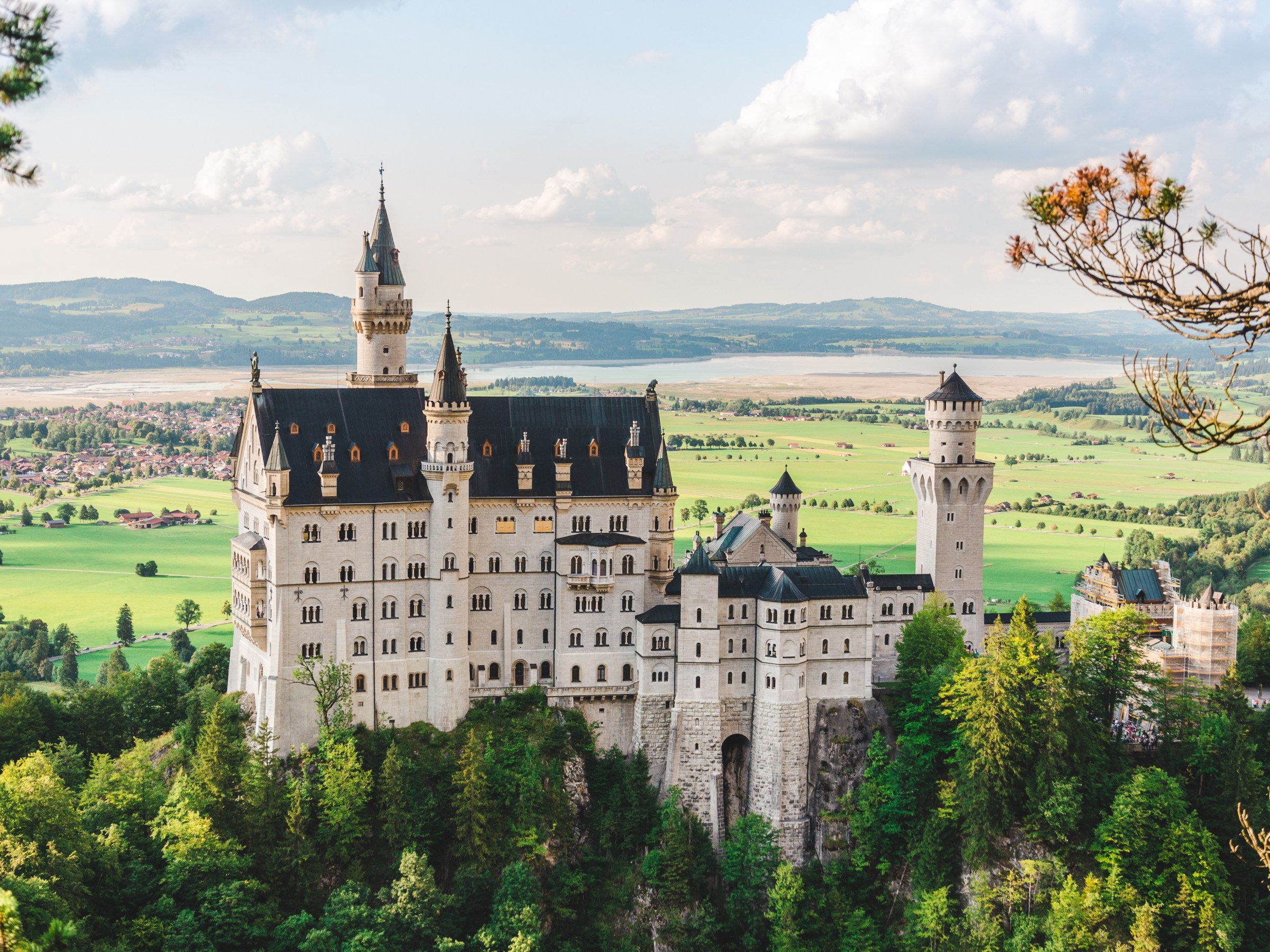
Neuschwanstein might, in some minds, be the perfect representation of a medieval castle. It’s large, built on the top of a hill with a spectacular view with forest stretching out for miles around, and it has a decided look of a fairytale about it. One can easily imagine a princess living, sighing wistfully at her window, waiting for her knight in shining armour to return to her.
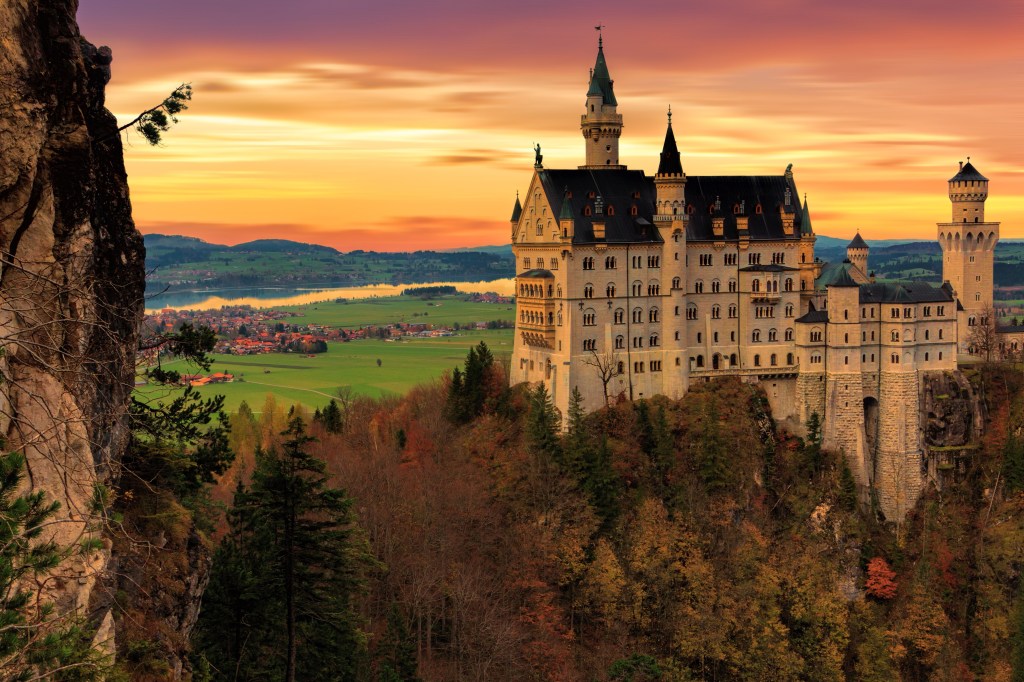
For me, Neuschwanstein was baffling.
Why is it not perched higher, specifically on top of slightly higher of the two peaks right behind it? Why does it not have a wall around the back to protect those windows? They seem awfully low. Why are there no arrow or gun slots? This place must have been a security nightmare!
I’d come to realise my concerns were valid, but misplaced. The palace was built in 1869. For reference, that’s only 45 years away from the start of the First World War, and 349 years away from the last possible date which could be considered Medieval.
The castle was built by King Ludwig the Second of Bavaria. You may remember him as the little boy who was born at Nymphenburg, and who built himself Linderhof as a hunting lodge. Some call him the Fairy Tale King, or the Swan King.

If you wish to see this beautiful castle, you’ll need to purchase a tour ahead of time. Online is easiest! Even pre-covid-19 you couldn’t just wander the castle by yourself, which is a pity because it looks to be worth the wander. The tours are exceedingly quick, too much so in my opinion, and photography is not allowed, so you’ll need to find a pamphlet of some sort if you want pictures of the interior. Books of that sort are available in the little village below the castle, likely where you or your tour bus parked when you arrived.
The castle itself is built on a hill, and so there will be a bit of an uphill walk to reach it. There are horse-drawn carriages that will bring you part of the way but you’ll still need to walk a bit. If you have time I suggest going up to the viewpoint first. There’s a bridge spanning a river which flows from the mountains behind Neuschwanstein, and from that bridge you’ll get the most gorgeous, unobstructed pictures of the entire palace. The bridge is actually part of a path, and if you have time to take the rest of it you can, but make sure you get to the bridge at least before you head back for your tour. When you come back down to the village there is an enchanting lake which can be accessed near the back end of the parking lot. It too will offer some beautiful pictures so be sure to check it out!
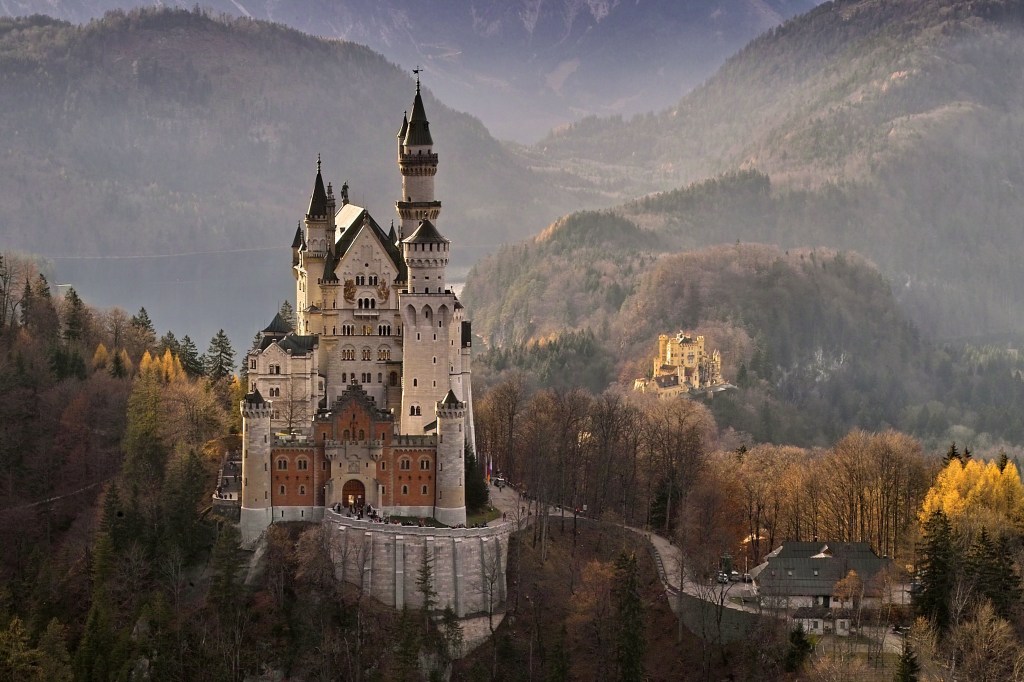
The road up to the castle is paved, but the trail up to the outlook bridge isn’t, so bring good walking shoes, dress comfortably for exercise, and bring a water bottle. You’ll also want to bring a couple of euro in coins as some of the bathrooms are pay bathrooms. Gross, I know. There are souvenir shops and cafes at the bottom of the hill, and a weirdly positioned souvenir shop at roughly the halfway point between the base village and the castle. You won’t be in want for food, but the lines can be long, so packing a lunch can be a good alternative.
Wash your hands, wear a mask, and stay safe gentle readers.
Spring Destinations

Yes that’s right, spring. For anyone thinking it might be a bit early to start planning a trip for Spring: Welcome! You must be new.
Given two hours I can have a trip planned and booked; but that doesn’t mean it’s the best way to go about things. For one thing, in Europe it’s much easier to take such spontaneous trips. The prices are cheaper, the flight times shorter.
North America demands a bit more forethought. No popping off to Paris for a weekend on a whim. This is especially true of post-covid finances. We don’t all have the time or finances to get from Newfoundland to Hokkaido. With that in mind, these options are great for those of us in the Eastern provinces of Canada.
Now’s the time to start planning and saving, so here are my top spots for Spring 2022!
1. New York, New York
I imagine summer can be quite hot in the Big Apple, and I think Spring would be a perfect time to walk around in a somewhat cooler clime to explore all that New York has to offer; especially the cherry trees and gardens! Not to mention all the history, both of the real kind and of the MCU kind.

2. Washington DC
I’m obsessed with Cherry Trees what can I say? Washington DC offers both my favourite trees and lots of history to go along with it. The perfect combo!

3. Holland, Michigan
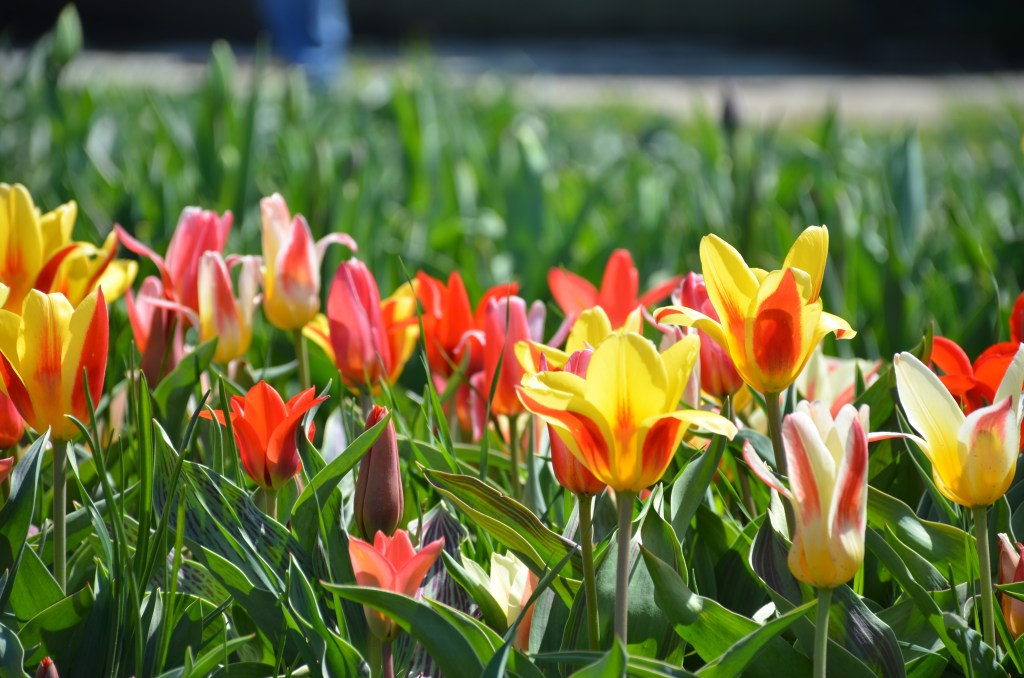
Ever since my trip to the Netherlands I’ve become enamoured with tulips, and Holland, Michigan has those in spades. In May they have a tulip festival, a nod to the town’s Dutch roots.
4. New Orleans, Louisiana
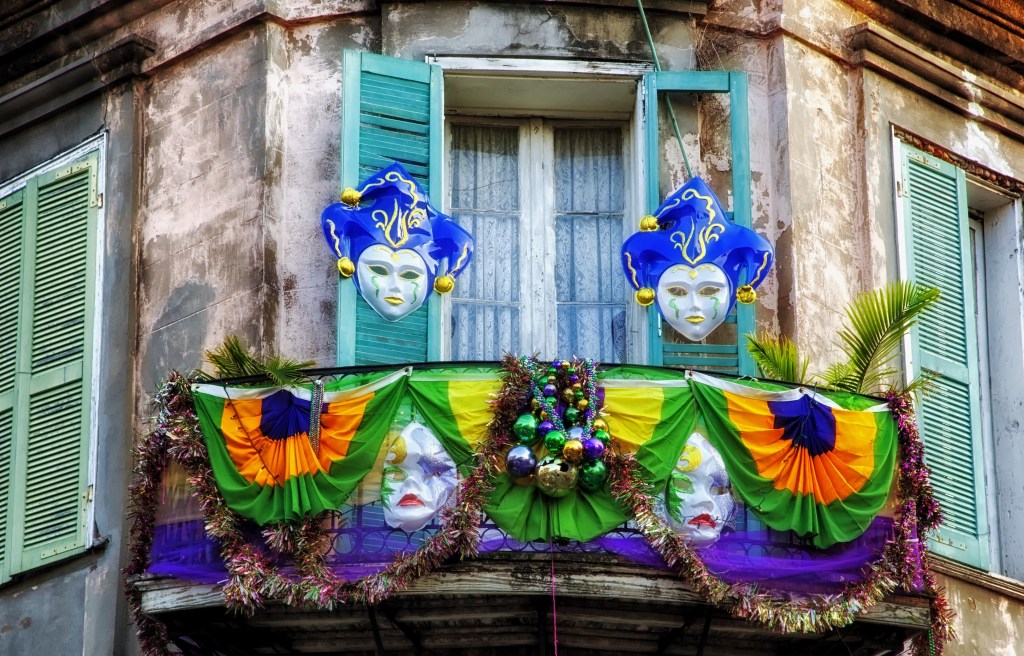
We could all use a party once it’s safe to do so, to celebrate the end of Covid. Mardi Gras is in March. Need I say more?
5. Charlottetown, PEI
Lobster season starts in May and ends in June so there’s a very limited time frame to get some of the best seafood in the world. There’s lots of history in Charlottetown too, so it’s a perfect vacation spot in my books!
Wash your hands, wear a mask, and stay safe gentle readers.
Newgrange

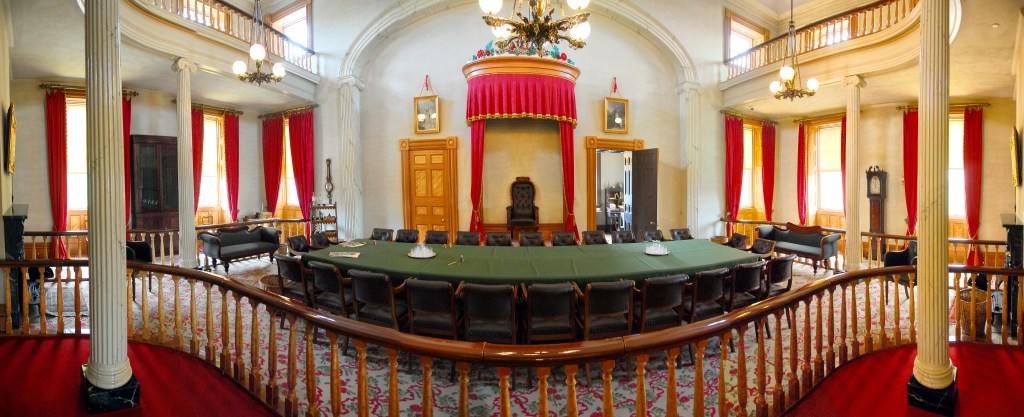
I love Neolithic stuff. It’s an adoration I picked up from running around Britain and Ireland, finding all sorts of passage tombs and cairns. There’s just something so mysterious and powerfully human about these ancient sites, and Newgrange happens to be one of very few large sites which you can experience almost fully. That’s right, you can go inside this passage tomb!
There are a few tours which can take you to Newgrange along with the Hill of Tara, though personally I prefer Mary Gibbons Newgrange Tours. I’ve been several times with multiple family members and their guides have always been excellent. You’ll need to book in advance through their website by email, and the tour costs €45. For the tour and knowledge you get, it’s well worth it in my opinion; probably the best in Ireland!
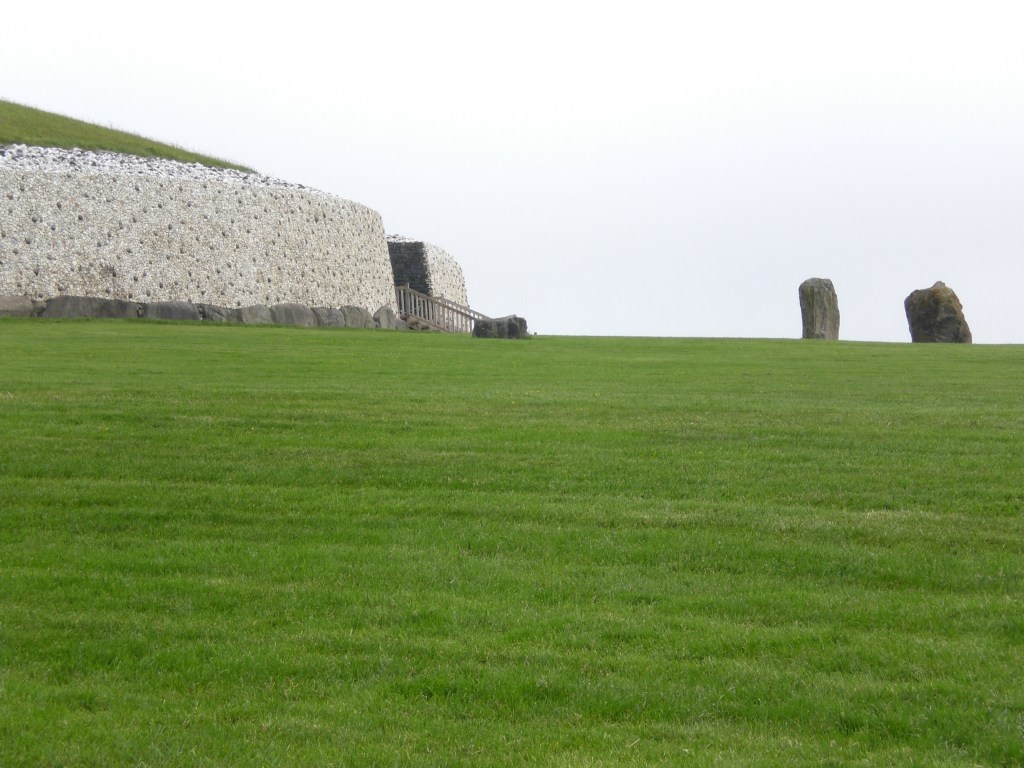
When you get to Newgrange you’ll be brought to a nearby farm which does have washroom facilities and a small café before you take a short bus ride up to the actual cairn. Beware of one of the goats, he likes to escape his pen and get on the tour buses, so store any items you’re keeping on the bus in the upper racks!
You’ll be in for a little wait when you get to the cairn, only a few people are in at a time as the passage will only accommodate so many. Don’t take any backpacks with you. If you have one you’ll be asked to leave it outside while you go inside the passage tomb. You’ll need to duck as you travel through the entrance, and do your best to keep your shoulders from rubbing on the stone. All of this is done to preserve the carvings and the ruin itself for future generations to enjoy.
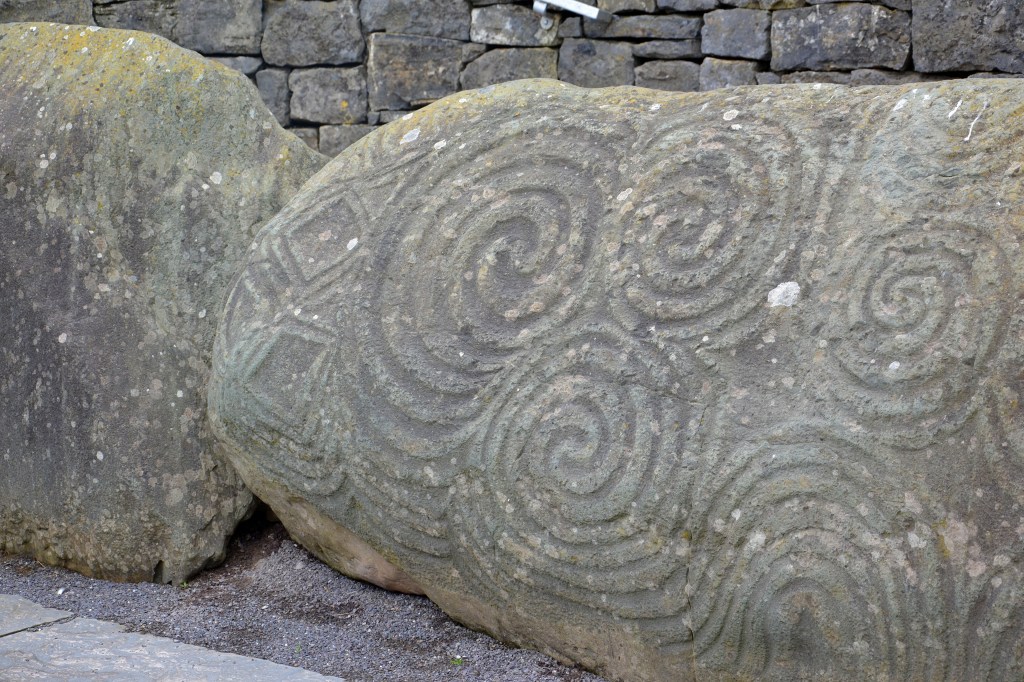
The passage itself is a bit claustrophobic, but once you’re inside the cairn’s middle chamber you’ll be able to stand upright, with a surprising amount of room. You’ll see three ante-chambers along the edges, go ahead and look around, but do try not to touch the stone, again for preservation reasons.
At one point your guide will turn off the electric lights to allow for the natural light to shine in. There will not be much, so if you’re afraid of the dark make sure someone you trust is nearby.
You’ll be given a moment or two to explore after his presentation is done before you leave. Just be sure to make it brief, as the next group will be waiting to enter.
You cannot take flash pictures inside New Grange (if I remember correctly you are allowed to record video and take flashless pictures), so be sure to turn that feature off before you go in. You’ll likely be too busy marveling at the structure you’re in to remember anything else. I know I did.
The chambers were built around 3200 BCE, which makes them roughly 5000 years old. They predate Stongehenge by about 200 years, and the oldest pyramid in Egypt (the Pyramid of Djoser) by about 500. In all that time, the roof has neither leaked nor collapsed.

There’s plenty to marvel at in this structure, but what I find the most fascinating is that this was discovered in 1699, and since then it has been a tourist attraction. Despite the purpose and use having been lost to us, people still connect to it and understand that this was a place of importance. We flock to it.
If you too feel a call to this ancient site, make sure you’re prepared with water bottle and a pair of good walking shoes. Some of us are perfectly fine with enclosed spaces, the dark, and knowing that this place was once a burial ground, but for others it might take a bit of bravery too. Not to worry, the skeletons have been removed; though it is still dark and closed in. Bring a loved one if you feel a bit afraid. It’s worth a touch of fear to experience something so ancient!
Wash your hands, wear a mask, and stay safe gentle readers.
Hotels vs. Hostels vs. (Air)BnBs

Hotels, hostels, and (Air)BnBs. The holy trinity of sleeping arrangements for people who, like me, disparage at the thought of camping. I know, I know, I’m a terrible Canadian.
I’ve heard some people disparage at both hostels and Airbnbs, and I’m here to deliver the good news: they can both be awesome and cheap alternatives to hotels and traditional BnBs. Each of these options comes with its own pros and cons, but hopefully this article will help you decide whether or not you want to give something new a try.
For the record, I’m not being paid by any of the companies mentioned. As always these are my honest thoughts and opinions.
Hotels: The Classic
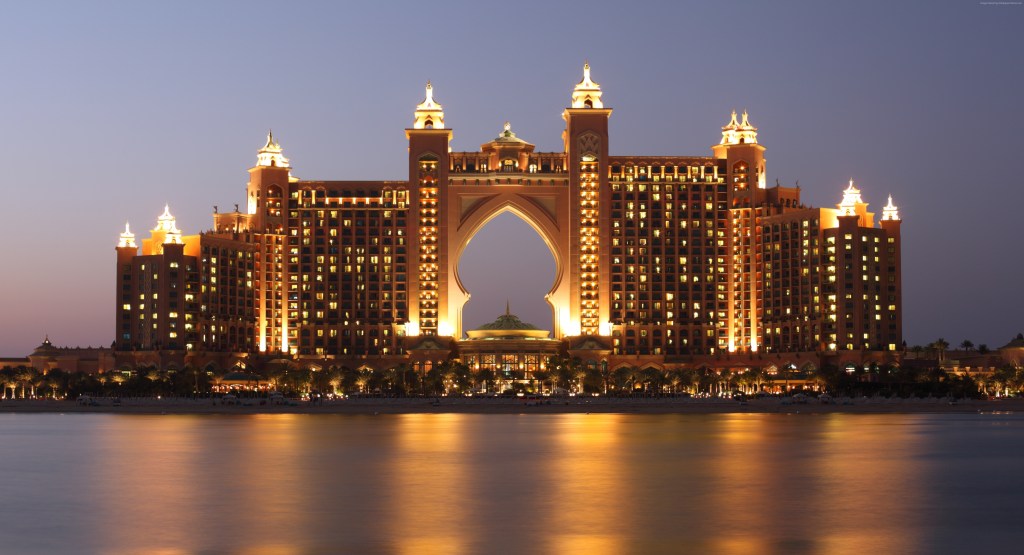
Pros:
- You can expect consistency. If you’re staying at a chain you’ll see roughly the same level of service irregardless of where you go.
- You can go to a manager if something goes wrong, and potentially have a long list of people higher up than them to speak to; though the problem is likely to be fixed very quickly.
- The rooms will have a certain standard of cleanliness.
- There will likely be amenities like complementary continental breakfast, a pool and gym, room service, and knowledgeable staff to help you.
- Hotels are usually fairly central or aren’t too far from a bus stop.
Cons:
- They can lack character, especially if it’s a chain. They’re nature is to be universally pleasant.
- Don’t bring any blacklights into any hotel room. Ever.
- They can be expensive, which isn’t necessarily what you want in a vacation, especially if all you’re doing is sleeping in said room. Think about it, it’s not like you’ll be chilling there all day!
Hostels: Youth’s Choice

Pros:
- They’re usually cheaper than hotels.
- Many have communal areas, especially lounges and kitchens. This comes in handy if you have dietary restrictions or want to save a bit of money on food, and with all these common spaces you’re bound to make new friends; all you need is a friendly attitude and an open mind!
- Hostels have chains too, so if you enjoyed your stay at one, you’ll likely enjoy another of their locations. My personal favourite is Nomads.
- Some hostels will have women only dorms, if you’re nervous about sharing your sleeping space with men. The Nomads in Queenstown New Zealand has this option, though I’m not sure it’s available in all of their locations.
Cons:
- Sometimes they’re only cheaper than hotels by a very small margin; unless you’re travelling with a large group of friends or are willing to share your accomodation space with strangers.
- The beds aren’t going to be as comfortable as a hotel. Anyone who tells you they are is lying to you.
- Less amenities than a hotel. You won’t find any pools here!
Bed and Breakfasts: The Quaint and Quiet
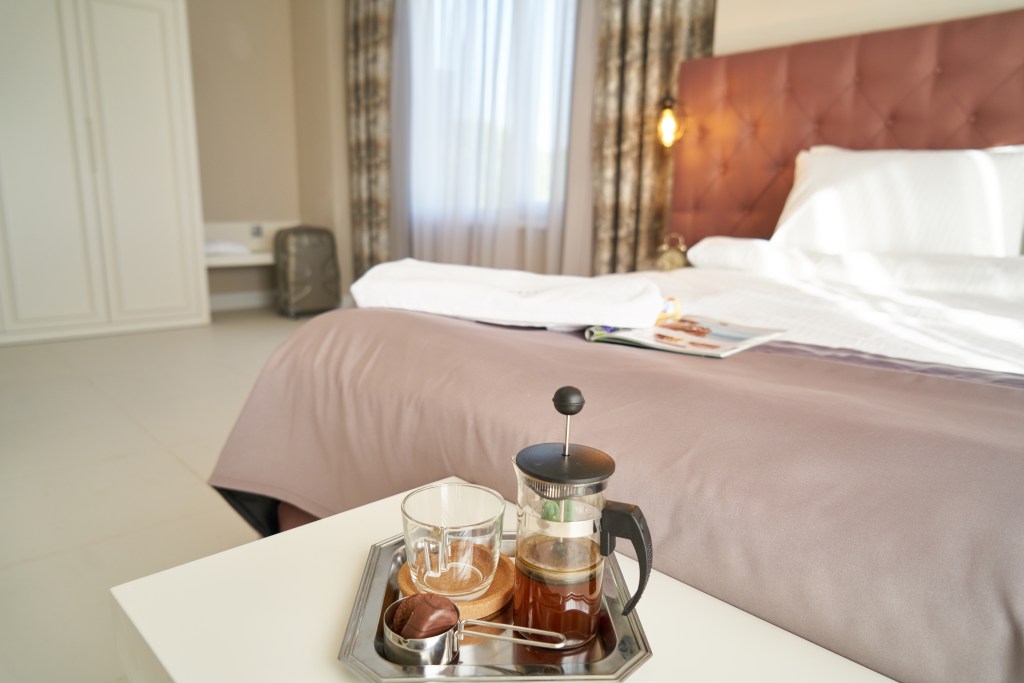
Pros:
- BnB owners have a reputation to maintain, so you can generally count on excellent care during your stay.
- Under the same vein, you can generally count on them being very clean.
- They’ll likely have a lot of character, as they are most often a home as well as an inn.
- They’re often situated in quieter, suburban or rural areas.
Cons:
- Usually you only rent out one room in the home, which is, naturally, habitated by the owner. You’ll need to be more considerate of them and your suroundings than you might be in a hotel.
- They can be much more expensive than hotels.
- There is no option for recourse if something goes wrong, save leaving a bad review.
- The quiet locations means you’ll be further from the heart of the action. This means a longer bus ride or drive in the morning to get to your destination-du-jour.
Air BnBs: Lost’s Personal Favourite
Pros:
- In major cities you can usually get an entire flat to yourself for the same price as a hotel room. Why not go with the bigger space if it’s the same price, right?
- They’ll either have a private or common kitchen so you can cook for yourself and save a bit of money.
- They can be literally anywhere, from downtown to quiet, less populous areas.
- AirBnB has a system which ensures that the reviews are from people who have actually stayed in the location they are reviewing. No fake reviews!
Cons:
- You take your chances with a new place.
- You are potentially in someone’s home, so much like the traditional BnBs, that might make some people uncomfortable.
When deciding which accomodation to book, I take several things into account. Location, price, and reviews. I feel like I’m constantly belabouring this point on this blog but to reiterate; do your research!
Make sure that transportation or whatever attractions you want to access are within walking distance of your accomodations. Look through Expedia, Kayak, Google, and Airbnb to ensure that you’ve looked at all options available to you in terms of price and location. In terms of reviews, read the most recent, and make note of those bad reviews and what they are complaining about. Some people just like to be negative, but if you see the same issue popping up more than once it might be worth reconsidering said option.
I also suggest knowing what you’re willing to put up with in terms of accomodations.
I can deal with not having continental breakfasts. They’re nice, but there’s probably a Greggs or something close, and if worse comes to worse I can stop in at a grocery store and get some bread and peanut butter. No refrigeration required! I can also live without alot of the amenities most hotels provide. Pools and gyms are nice but unnecessary. I’d go for a dip but why work out any more than I already am, I’ve likely walked my feet off exploring the city. Even a room without a tv is fine by me. I carry a pen and pad wherever I go, and I always have a book. As long as I can plug my phone in for a bit of music or a podcast, I’m good to go.
What I cannot abide by are rooms which smell like ash trays, are unclean, or less than private. I’m unwilling to share bathrooms, and unwilling to stay in a place which has reviews commenting on an dirty room.
Other than that, I’m only there to sleep, so anything fancy is just a bonus.
Personally I really love renting out flats but hostels with private rooms are great options too. I almost always go for hotels if there aren’t any nice flats available or if the hostels seem a bit dodgy. If you’re looking for an excellent hostel, I’d recommend anything by Nomads. They’re comfortable, clean, and super friendly!
I hope to see you all on the road soon, gentle reader, when it’s safe for all of us to go out into the world again. Until then, wear a mask, wash your hands, and stay safe gentle reader.
The Cup and Saucer Trail
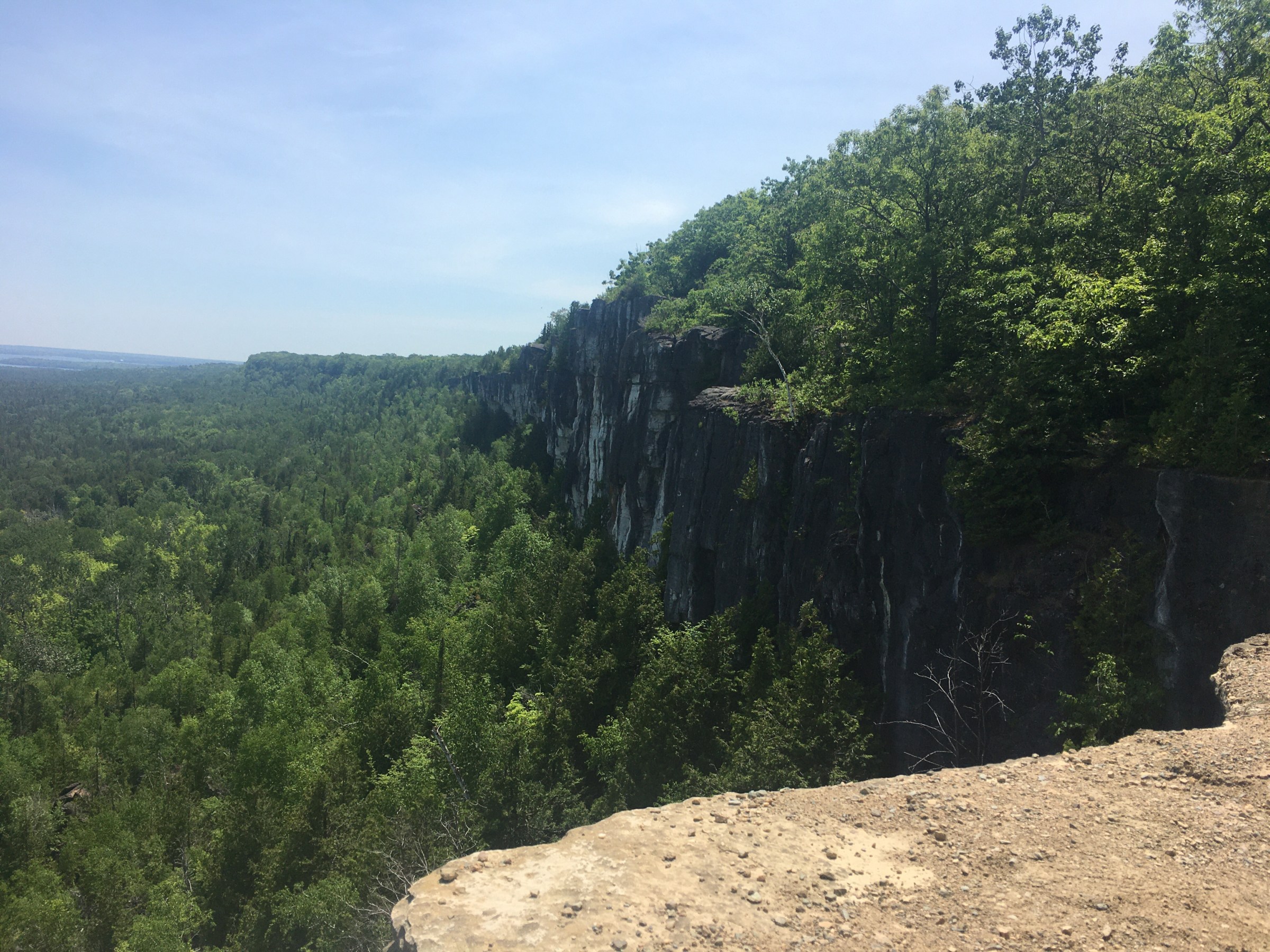
In life, there are always places, things, or people who get certain names which make you wonder “How on earth did you earn that moniker?” Sometimes after a bit of research it seems evident. Other times, not so much. The Cup and Saucer Trail is the later.
The Anishinaabe who inhabit the area call this place Michigiwadinong, which means ‘bluff in the shape of a spearhead’. The story goes that Nanabozho, one of their great teachers (and mischief makers) was taunting some Mohawks further south, and fled up north as they chased him. He made himself a spear and turned to face them in the Mnidoo Mnising (Manitoulin Islands), when he lost his nerve, dropped the spear, and ran further. The bluffs are said to be what remains of his spear, the head having been separated from the shaft.
To me, this makes much more sense than a cup and saucer.
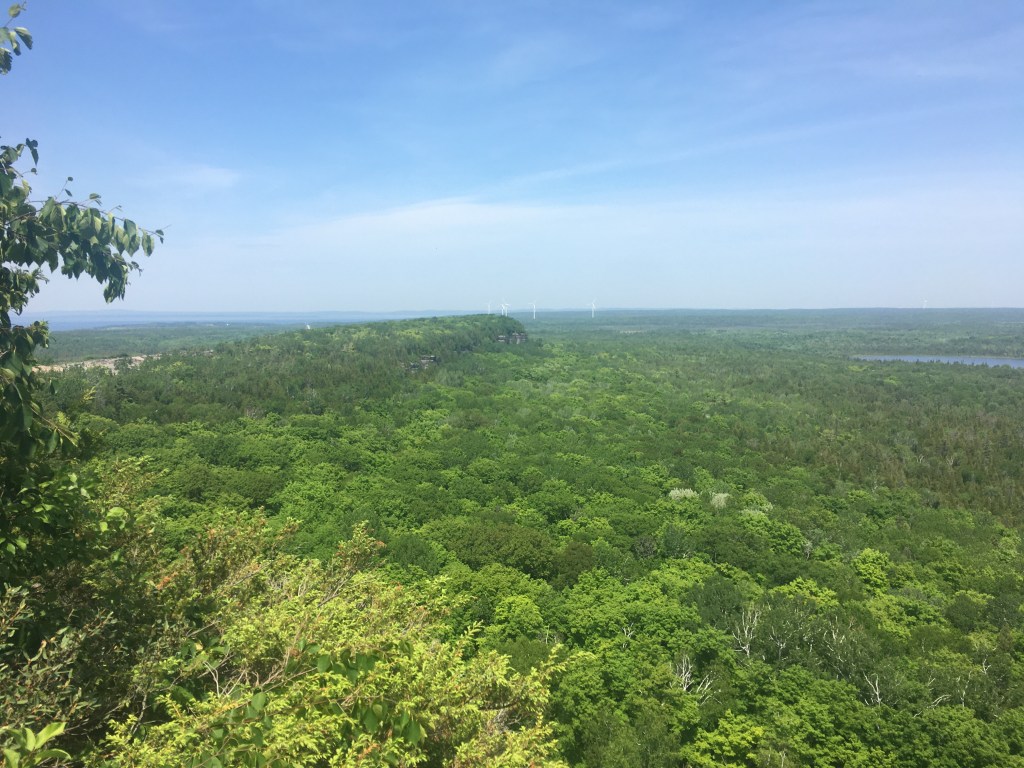
Above you can see the elevated spearhead, below you can see the ridge which forms the spear shaft. I happen to overhear another hiker say “These cliffs look like something out of Jumanji!”
You’re not wrong, my guy, you’re not wrong!

How anyone got a cup and saucer out of that I’ll never know, and as of yet no one has been able to point it out to me.
The red trail will lead you to the lookouts, and needless to say it is not wheelchair accessible, none of the trails are. For the most part the path is pretty well laid out and neat but there are some rocky portions and some require the ability to climb stairs which by their steepness are one degree away from being ladders.
Said lookouts are well worth it though. Beware the edge, there’s no safety rails! Mama Lostman wasn’t terribly proud of this picture for that very reason.
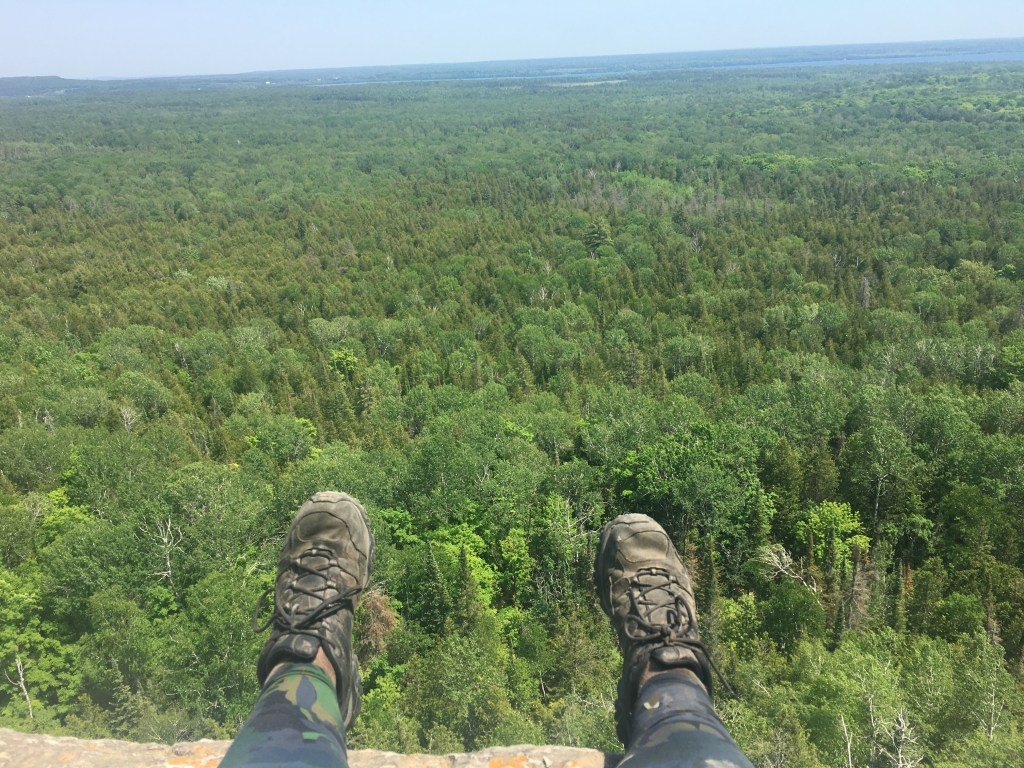
The trail to these lookouts is about 5km, but as Mama Lostman and I will tell you, it feels a lot longer. I attribute this to having taken the so called yellow “Adventure Trail”, one of three marked routes that form the entirety of the Cup and Saucer trails. This yellow trail is 500m and runs adjascent to a portion of the Red Trail, and is filled with all sorts of rocky portions and caves to climb through, though there’s always a way around these. It’s really quite fun to go through them though!
If you want to help keep up the trail, there’s a pay-what-you-can sign where you can scan a q-code and pay via your phone. If you have a few cents to spare, I suggest you do so! I would also suggest that you not go during a day that it has rained. The rocks have been worn smooth by years of hikers on the trails, and are slippery enough as it is, rain and mud would make things infinitely worse.

Bring good walking shoes, at least two bottles of water per person, bug spray, and sunscreen. For the most part yellow and red trails are shady, but I’ve not accessed the much longer blue trail, so I can’t comment on how forested it is. Be prepared to be up there for at least three hours, so I suggest bringing a lunch or something similar. There are no picnic tables, but we brought chairs and set up a makeshift lunch spot in the wildlife observatory in the parking lot. Said lot also boasts surprisingly clean porto-potties in the parking lot which you can use before you head into the bush.
As with all hikes, remember to pack out all of your garbage, leave any animals alone, and of course obey the golden rule. Take nothing but pictures, leave nothing but footprints.
Wear a mask, wash your hands, and stay safe gentle reader.
You Will Only Be Here Once
“I can always come back.”
It’s a travel philosophy that I’ve heard more than once, and have yet to wrap my head around it; especially since mine is the exact opposite.
“I may never be back.”
The former philosophy is as follows; “I can afford travel to this particular lieu whenever I want, both financially and chronically, therefore I should do the big touristy stuff first and then do whatever else there is.”
The later, my own, being “Everything is at the mercy of fate and if I don’t see what I desperately want to now, I may never see it ever again.”
Proof; the burning of Notre Dame.
I had visited twice before, and not been able to climb the towers on either occasion. I had planned to make the climb on the third visit, but the roof of the cathedral caught fire two days before I was scheduled to leave for France. Now, I don’t know if I will ever be able to climb it. I hope I will, but I’m not certain.
I can always come back. I’m too tired. I don’t really feel like it. I don’t really need to see it.
Those sentences have gotten me nowhere in my travels.
I must point out, I am young and perfectly able, with no impeeding conditions or ilnesses. If I push my body to climb a mountain I may be sore for a day or two afterwards but ultimately I won’t be too worse for wear. For those who do suffer major consequences after pushing themselves, those sentences are completely valid.
It’s just that to me, they really aren’t; and they can ultimately be damaging.
I don’t usually regret the things that I do, but I often regret the things I don’t. Not going skydiving is a massive one. Could it have ended terribly? Absolutely. So can crossing the street.
To travel fearlessly is not the goal; fear keeps you safe. Be respectful of the places you visit, and don’t go doing dangerous things without the proper precautions, knowledge, or guides.
The goal is to travel without regret, and to live this one previous life you have to it’s fullest. If that means going skydiving, then so be it. If that means going to visit that one temple you’ve always wanted to see despite the fact that it’s not a popular tourist destination, then so be it. If it means you stop your hike to wander off the beaten path just a little for some pictures, so be it.
Make the most of it. Act as though you’ll never be here again; because you might not.
 Lostman's Star